🔔 Bell Feed Daily Digest
2026-04-26 · 24 summaries · 170 tweets
📌 今日重點
以下是今日推特摘要的濃縮總結:
近期市場動態顯示 $ETH 和 $SOL 鏈上的 Meme 板塊活躍,而美國軍方高度重視 $BTC 的戰略意義。傳統金融機構如 Western Union 則積極佈局穩定幣業務,預示著加密貨幣與傳統金融的融合趨勢。同時,量子運算對 $BTC 和 $ETH 的潛在威脅以及 $LTC 零日漏洞事件也成為關注焦點。
在個別代幣方面,$AAVE 在 Solana 上的引入以及 $OP 因 Ethfi 遷移而受到的關注,顯示出生態系統間的互動與潛在交易機會。AI 敘事與鏈上安全分析工具的結合,以及 AI 生成的 Meme 幣,也成為新的熱點。另一方面,監管動態、市場情緒及「尋找價值」的策略,共同塑造著當前的加密貨幣格局。
📈 趨勢變化(過去 24h vs 前 24h)
🆕 新冒出: $UPEG(3), $ASTEROID(2), $BELKA(2), $IMAGINE(2), $SUN(2)
🔥 持續熱門: $ETH(4→6), $APE(2→3)
📉 熄火: $MICHAEL
🔥 持續熱門: $ETH(4→6), $APE(2→3)
📉 熄火: $MICHAEL
📊 帳號排行榜(最近 7 天)
| # | 帳號 | 推文數 | 平均讚數 | 熱門代幣 |
|---|---|---|---|---|
| 1 | @WatcherGuru | 22 | 536 | $ETH(1), $RAVE(1) |
| 2 | @monad | 4 | 115.5 | - |
| 3 | @brian_armstrong | 2 | 113 | $ATLAS(1), $FROM(1) |
| 4 | @moonshot | 5 | 99.2 | - |
| 5 | @pmarca | 67 | 87.4 | - |
| 6 | @MustStopMurad | 12 | 54.2 | - |
| 7 | @YTJiaFF | 2 | 48.5 | - |
| 8 | @0xCygaar | 7 | 39.4 | - |
| 9 | @lookonchain | 15 | 38.9 | $ETH(11), $BTC(3), $ASTEROID(2) |
| 10 | @bull_bnb | 16 | 38.8 | $APE(2), $ASTEROID(1), $BNB(1) |
🔥 炒作標的
| Ticker | Contract | 原因 |
|---|---|---|
| $STONK | 0xb60fde5d798236fbf1e2697b2a0645380921fccf | 馬斯克相關IP、銷毀機制 |
📊 Hourly Summaries
08:00 · 17 tweets
近期加密貨幣市場動態顯示,主網 $ETH Meme 板塊以及 $SOL 鏈上的活動表現活躍,有分析指出 $ETH Meme 板塊適合長期持有者。美國軍方高層將 $BTC 視為重要的計算科學工具,具有國家戰略意義。同時,Western Union 計劃積極拓展穩定幣業務,包括在 $SOL 上發行穩定幣並推出穩定幣支付卡,顯示傳統金融機構對加密貨幣領域的持續探索。
Trading Signals
- $BELKA: 潛在新興代幣,有社群討論和 Meme 相關性。
- $SUN: 提及銷毀代幣的計劃。
- $ETH: 主網 Meme 板塊被提及,適合尋找抄底機會。
- $STONK: 合約地址 0xb60fde5d798236fbf1e2697b2a0645380921fccf,被提及與馬斯克相關 IP,且有銷毀機制。
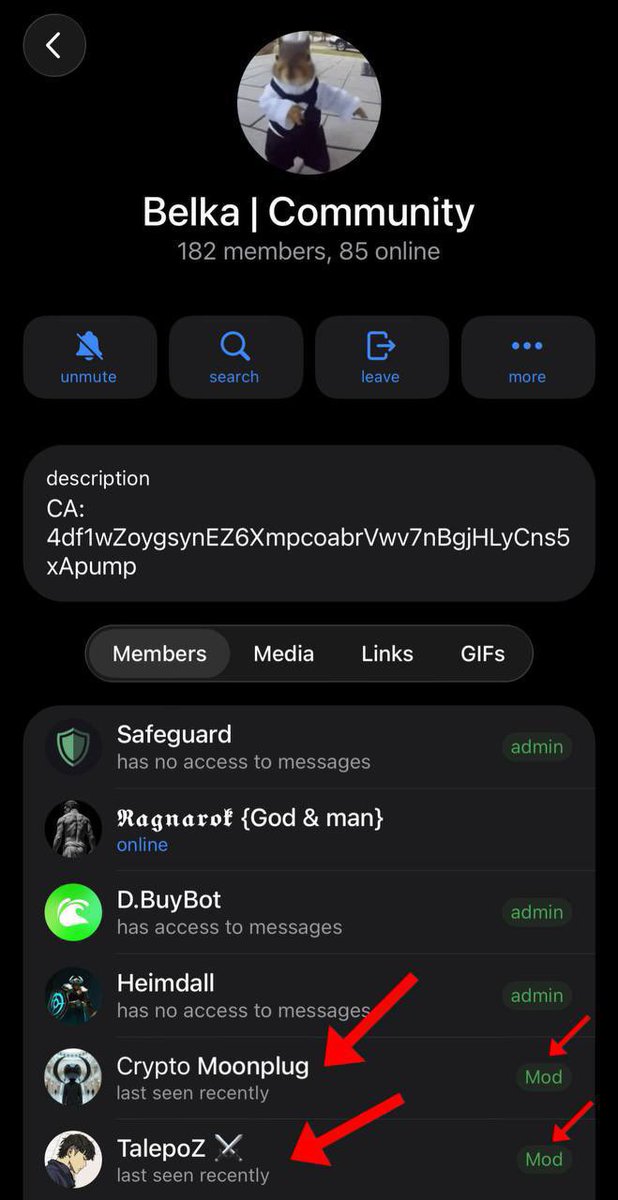
- $PUNT: 被提及與 $BELKA 相關。
- $SUN: 提及銷毀代幣的計劃。
- $ETH: 主網 Meme 板塊被提及,適合尋找抄底機會。
- $STONK: 合約地址 0xb60fde5d798236fbf1e2697b2a0645380921fccf,被提及與馬斯克相關 IP,且有銷毀機制。
- $PUNT: 被提及與 $BELKA 相關。
0x522d075ee59c11e31dcdce445b15e52a72027777
0x0a3d3773d2075f0244eba06363cea90ca2b103bc
0xb60fde5d798236fbf1e2697b2a0645380921fccf
07:05 · 11 tweets
本小時的推文主要聚焦於 AI 工具的應用與開發,特別是關於 LLM 的實際操作、潛在的「AI 精神錯亂」陷阱,以及如何透過嚴謹的測試與架構管理來駕馭這些工具。同時,也觸及了「刀盾狗」迷因在遊戲產業的應用,以及 memekiller365 對「直覺」與「AI 訓練數據」之間關聯性的探討。宏觀經濟方面,僅有 Marc Andreessen 提及「社會主義者」與「省時裝置」,以及「兩邊立場明確」的論述,缺乏具體的加密貨幣或市場動態。
06:05 · 11 tweets
$LTC 的 MimbleWimble 扩展区块 (MWEB) 隐私层出現零日漏洞,導致部分節點驗證無效交易並觸發 DoS 攻擊,但網路已回滾並修復,正常交易未受影響。部分推文討論了 AI 代理和框架的開發,另有推文提及了與體育界人士和個人理財的隨意討論。
Trading Signals
- $LTC: MimbleWimble 擴展區塊 (MWEB) 隱私層出現零日漏洞,導致 DoS 攻擊,但漏洞已修復,網路恢復正常。
05:05 · 11 tweets
昨日,加密貨幣領域最引人注目的動態是關於量子運算對 $BTC 和 $ETH 安全性的潛在威脅。有研究指出,量子電腦已能顯著縮短破解密鑰的時間,且 $BTC ETF 的風險揭露中也已加強了相關警告。此外,一起牽涉數億美元的比特幣盜竊案和洗錢事件的判決出爐,顯示犯罪者利用虛擬貨幣進行非法活動的手段。
Trading Signals
- $BTC: 量子運算風險升級,可能影響其長期價值。
- $ETH: 量子運算風險升級,可能影響其長期價值。
- $ETH: 量子運算風險升級,可能影響其長期價值。
04:05 · 10 tweets
美國總統川普表示對加密貨幣產業負有「義務」,並認為其已成為「主流」和「龐大產業」。與此同時,有推文指出 $ETH 基金會未對 $AAVE 提供支援,而 $SOL 則出手相救,顯示兩個生態系統的格局差異,預示未來差距可能擴大。此外,與 Uniswap 相關的敘事也可能推動了 $HAY 的上漲。
Trading Signals
- $HAY: 因 $UPEG 帶動 Uniswap 相關敘事而上漲
- $SOL: 在 $ETH 基金會未支援 $AAVE 的情況下提供支援,顯示其生態系統的活躍度
- $SOL: 在 $ETH 基金會未支援 $AAVE 的情況下提供支援,顯示其生態系統的活躍度
03:04 · 4 tweets
加密貨幣市場方面,有推文提到 $UPEG 是一個 $HOOK 鏈上的小創新,儘管發展緩慢,但可能引起對 $HOOK 的關注。宏觀經濟方面,有推文分享了關於多種貨幣支持的圖表。地緣政治方面,無明顯動態。
Trading Signals
- $UPEG: $HOOK 鏈上的小創新,可能引起關注。
02:04 · 2 tweets
過去一小時的討論主要集中在幣圈一级市场中“车头”角色所帶來的現狀,這種模式強調拼手速而非項目基本面,引發了對早期 meme 項目發展模式變遷的感慨。儘管如此,社群仍對新事物的出現和市場的持續演進抱持期待。
01:04 · 5 tweets
Solana 基金会通过向 Aave 提供 USDT 贷款,展现了对 DeFi 生态稳定的支持,并计划将 AAVE 引入 Solana 网络。该举措在加密社区引起关注,尤其是在 Aave 出现问题时,Solana 的积极行动与以太坊基金会(据称)的处理方式形成对比。此外,关于 Exa Card 在 Base 链上的应用也得到了提及。
Trading Signals
- $AAVE: Solana 基金会计划于本周末将 AAVE 引入 Solana 网络,可能引发交易机会。
- $USDT: 提及 Solana 基金会向 Aave 提供 USDT 贷款,可能与 Aave 生态的稳定或潜在的代币活动相关。
- $USDT: 提及 Solana 基金会向 Aave 提供 USDT 贷款,可能与 Aave 生态的稳定或潜在的代币活动相关。
00:04 · 5 tweets
地缘政治方面,美国取消了前往巴基斯坦的谈判行程,这被解读为可能导致市场下跌。同时,推文中也提到了AI创业公司日销售额的增长以及一个在 $BASE 链上构建的全球金融科技创业公司的愿景。
Trading Signals
- $SUN: 火星主动燃烧 + 屎壳郎分红 LP (Ca: 0x522d075ee59c1…)
23:03 · 12 tweets
加密貨幣市場方面,有關於 AI 驅動支付新浪潮的討論,以及對 $BURNIE 的潛在操作和 $FLORK 的價格預期。地緣政治上,聖母荷姆茲海峽的緊張局勢持續,儘管面臨美國封鎖。
Trading Signals
- $BURNIE: 潛在操作,等待市場起風
- $FLORK: 期望跌至 5m 市值後加倉
- $FLORK: 期望跌至 5m 市值後加倉
22:03 · 5 tweets
本週加密貨幣市場動態顯示,$uPeg 實驗獲得 OpenSea CEO 的關注與支持,同時 $ARC 測試網項目進展順利,已吸引超過 100 家機構參與,並預計於 2026 年上線主網,將發行原生代幣。Bitget 平台的 $BGB 透過 Launchpool 等持續賦能,APR 達到 22%。
Trading Signals
- $uPeg: OpenSea CEO 關注並購買,支持實驗
- $ARC: 進行測試網互動可累積早期貢獻度,未來有機會獲得空投
- $BGB: Bitget Launchpool 項目,當前 APR 22%
- $ARC: 進行測試網互動可累積早期貢獻度,未來有機會獲得空投
- $BGB: Bitget Launchpool 項目,當前 APR 22%
21:03 · 5 tweets
过去一小时的推文显示,有关于 $ASTEROID 代幣的讨论,其吉祥物获得了 $MUSK 的回应,并与一个基金会相关联。同时,出现了关于 $TRADOOR 代幣疑似操纵和清洗交易的警示,该代幣在短时间内经历了 90% 的暴跌。此外,也有提到 $MUSKISM 的买入行为。
Trading Signals
- $ASTEROID: 提及吉祥物获得 $MUSK 回应,并与基金会相关。
- $TRADOOR: 疑似操纵和清洗交易,短时暴跌 90%。
- $MUSKISM: 提及买入行为。
- $TRADOOR: 疑似操纵和清洗交易,短时暴跌 90%。
- $MUSKISM: 提及买入行为。
0x282133187ee2c471a562c5617d87ec55e19499f0
20:03 · 6 tweets
加密貨幣市場正關注亞洲,特別是香港,其 Web3 政策的連續性和明確性被視為相較於美國監管不確定性的一大優勢。同時,有報告指出,Polymarket 存在一種名為「Ghost Fills」的漏洞,攻擊者可利用極低的成本獲利,該漏洞尚未修復。另一方面,Binance 正在進行用戶獎勵活動,鼓勵用戶參與。
Trading Signals
- $SUN: 有東西(地推介入)
- $AXS: 壓力大,1.775 可能是日內大頂,嘗試做空
- $AXS: 壓力大,1.775 可能是日內大頂,嘗試做空
0x522d075ee59c11e31dcdce445b15e52a72027777
19:02 · 1 tweets
近期加密市場動態顯示,雖然有提及對 $ETH 和 $BTC 的討論,但未出現明確的交易信號。宏觀經濟方面,儘管有關於市場情緒和投資者能力的討論,但並未直接連結到具體的交易決策。地緣政治方面,過去一小時的推文未提及相關資訊。
18:02 · 1 tweets
幣安 CEO 何一在 BNB Chain AMA 上提出對年輕女性的四項能力建議:勇氣、認知、執行力、野心。她強調學歷並非成功的唯一標準,追求更好的生活無需感到羞恥。
17:02 · 6 tweets
近期加密貨幣市場動態顯示,儘管部分代幣遭遇下跌,但 $OP 因 Ethfi 遷移至 OP TVL 暴漲而受到關注,被認為是以太坊二層敘事中的潛在交易機會。同時,以太坊鏈上的 Memecoin 和 NFT 板塊也因 $Asteriod 的影響而有所活躍。宏觀經濟方面,對個別加密貨幣的操盤跡象被提及,但具體影響有待觀察。
Trading Signals
- $OP: 由於 Ethfi 遷移至 OP TVL 暴漲,被認為是 Eth 二層敘事中具有利好且市值處於底部的代幣。
- $Asteriod: 帶動 Eth 鏈 Memecoin 及 NFT 板塊活躍。
- $Asteriod: 帶動 Eth 鏈 Memecoin 及 NFT 板塊活躍。
16:02 · 6 tweets
近期市場動態顯示,妖幣策略因市場情緒波動而迎來新的機會,特別是閃崩策略被認為可能在熊市中取得勝利。同時,對於加密貨幣錢包產品的更新也持續進行,旨在提升用戶體驗和功能性。在鏈上生態方面,$APE 短期內的大幅上漲被視為一個跡象,表明「贏家」的敘事再次吸引資金流入,類似於過去 $BONK 在 $SOL 鏈上的表現。
Trading Signals
- $imagine: 6x 漲幅
- $Tradoor: 閃崩策略中的潛在標的
- $APE: 短期內 300% 漲幅
- $Tradoor: 閃崩策略中的潛在標的
- $APE: 短期內 300% 漲幅
15:01 · 7 tweets
近期推文顯示,加密貨幣領域持續關注 AI 敘事,特別是與 AI 模型結合的鏈上安全分析工具,以及 AI 生成的迷因幣(meme coin)。同時,也出現了關於加密貨幣持有者數據洩漏的擔憂,可能導致法規風險。整體市場氛圍似乎在為新的「地板價」時代做準備,預示著地板價的潛在增長。
Trading Signals
- $GENE: AI 自主迷因幣,有社群提及和分享合約地址。
- $imagine: 與 AI 敘事相關,有知名人士(老馬)積極互動,且出現價格上漲跡象。
- $imagine: 與 AI 敘事相關,有知名人士(老馬)積極互動,且出現價格上漲跡象。
0x8728abd5541c6a66a899090acadc3696d9941110
0x4393b54385e91824a2ae5dfd35e226a3313a1a18
14:01 · 4 tweets
哥伦比亚与美国当局联合破获了一个涉及贩毒集团 CJNG 的加密货币洗钱网络,据报道,该网络自 2023 年以来通过加密货币转移了超过 1.9 亿美元。有分析认为,$ETH 的稳妥获利方式是抓住热门币回调时介入并持有上涨趋势。同时,也有观点将 $AXS 与 $ORDI 的表现进行类比。
Trading Signals
- $ETH: 抓住热度大币回调的机会直接上仓位干,然后拿住一波上涨的趋势。
- $AXS: 有点 $ORDI 的感觉了。
- $AXS: 有点 $ORDI 的感觉了。
13:01 · 11 tweets
加密貨幣市場方面,有推文討論 $BELIEF 的漲勢,及其 launchpad 市佔率達到第三。同時,也有關於 $BOAR 代幣在 $SOL 和 $ETH 上的表現,指出以太坊上的 $BOAR 表現不佳。孫宇晨 (@justinsuntron) 則分享了波場 ICO 的歷史,以及其持續在行業中發展的原因,並鼓勵用戶「Keep going」。此外,還有推文提及 Telegram 創辦人指控法國稅務官員出售加密貨幣持有者數據,導致綁架事件。
Trading Signals
- $BELIEF: 漲勢強勁,其 launchpad 市佔率達到第三。
- $BOAR: 在 $SOL 上表現強勁,但在 $ETH 上表現不佳。
- $BOAR: 在 $SOL 上表現強勁,但在 $ETH 上表現不佳。
12:01 · 8 tweets
CZ 指出,儘管機構湧入,Web3 仍有普通人機會,AI 的火熱反而為 Web3 篩選出長期建設者。有消息指出,新的比特幣硬分叉 eCash 預計於 8 月上線,將為比特幣持有者提供 1:1 的代幣分配。同時,有跡象顯示 $ROTUS 受到美國政治氛圍的影響,表現強勁。
Trading Signals
- $ROTUS: 受川普新口號及美國新聞頭條影響,有潛力擴大市場佔有率。
- $Pendle: 詢問是否會回歸。
- $eCash: 新的比特幣硬分叉,預計 8 月上線,比特幣持有者將按 1:1 比例獲得。
- $Pendle: 詢問是否會回歸。
- $eCash: 新的比特幣硬分叉,預計 8 月上線,比特幣持有者將按 1:1 比例獲得。
11:01 · 7 tweets
加密貨幣市場進入盤整期,缺乏明確主線,DeFi 表現疲軟,市場情緒轉向炒作和「尋找價值」。委內瑞拉反對派提議以出售石油換取比特幣並建立國家儲備,這可能為比特幣開闢新的敘事。與此同時,美股表現強勁,吸引了部分流動性,顯示出資金流向更容易賺錢的市場。
Trading Signals
- $SIREN: 炒作
- $RIVER: 炒作
- $RAVE: 炒作
- $RIVER: 炒作
- $RAVE: 炒作
10:00 · 8 tweets
近期,加密貨幣市場動態顯現出區域性監管收緊的趨勢,例如加拿大曼尼托巴省提議對加密貨幣礦企徵收雙倍電費,可能導致合規企業面臨困境。宏觀層面,前總統特朗普將舉辦針對持幣者的活動,再次引發其虛擬貨幣相關的利益衝突爭議。同時,以太坊基金會因在 AAVE DeFi 危機中出售 ETH 的行為受到批評,損害了其公信力。人工智能與 Web3 的結合被視為新的敘事熱點,預計將為行業帶來新機遇。
Trading Signals
- $ETH: 以太坊基金會於 $2387 價格出售 10000 枚 ETH。
- $WLD: 兩個疑似與 Worldcoin 團隊相關聯的錢包地址向 Bybit 存入 2117.7 萬枚 $WLD。
- $Ape: 該代幣持續收到監控信號,存在交易機會。
- $WLD: 兩個疑似與 Worldcoin 團隊相關聯的錢包地址向 Bybit 存入 2117.7 萬枚 $WLD。
- $Ape: 該代幣持續收到監控信號,存在交易機會。
09:00 · 7 tweets
韓國法律專家將加密貨幣視為離婚財產分割對象,隱瞞可能面臨後續追訴。借貸平台 Aave 透過「DeFi United」計畫彌補 rsETH 事件造成的壞帳缺口,目前已獲得大部分援助承諾。Polymarket 計畫進行鏈遷移、重構訂單簿並推出永續合約,以解決業務增長帶來的基礎設施壓力。
Trading Signals
- $ETH: Aave 壞帳彌補缺口仍有 5,505 枚 ETH。
- $MATIC: Polymarket 計畫進行鏈遷移。
- $MATIC: Polymarket 計畫進行鏈遷移。
🐦 Tweets
08:00 · 17 tweets

方圆🧲 @klys7788 · 07:10
$STONK 合约:0xb60fde5d798236fbf1e2697b2a0645380921fccf
抄底了这个,有社区在运作,币价从高点回调了一半,每笔交易自带销毁,马斯克相关的大IP,量能和K线走势来分析目前2M还是很具性价比的!
抄底了这个,有社区在运作,币价从高点回调了一半,每笔交易自带销毁,马斯克相关的大IP,量能和K线走势来分析目前2M还是很具性价比的!
♥ 8 · 👁 1483 · View →

0x江峰.🧲 @0x1JF · 07:30
Cammy Lowe 在 2019 年救了一只小鹿 Rudolph(昵称 Rudy),并一直照顾它多年。
后来新泽西州当局介入,把 Rudy 带走,并计划处置他,同时对 Cammy 提起指控。
Cammy 目前正在进行长期法律斗争,希望保住 Rudy 的生命并把他带回,或确保他安全,同时避免自己入狱。
案件审判定在下周三开始。
她发起了 GoFundMe,用于支付法律费用以及相关救援行动。开发者已捐 300 美元。
叙事目前还没发酵开来,有点像PUNT
SOL:BmXVrGfDa2dTTbdSfcw1QpSWym4wJtNJqPbNjLkepump
ETH:0x0a3d3773d2075f0244eba06363cea90ca2b103bc
后来新泽西州当局介入,把 Rudy 带走,并计划处置他,同时对 Cammy 提起指控。
Cammy 目前正在进行长期法律斗争,希望保住 Rudy 的生命并把他带回,或确保他安全,同时避免自己入狱。
案件审判定在下周三开始。
她发起了 GoFundMe,用于支付法律费用以及相关救援行动。开发者已捐 300 美元。
叙事目前还没发酵开来,有点像PUNT
SOL:BmXVrGfDa2dTTbdSfcw1QpSWym4wJtNJqPbNjLkepump
ETH:0x0a3d3773d2075f0244eba06363cea90ca2b103bc

♥ 4 · 👁 199 · View →

CryptoCat|猫姐🐈 @Crypto_Cat888 · 07:55
看来BSC还是地推最靠谱
PvP已经农不过了,安小将、BNTI 、太空狗换头像彻底摧毁了我对BSC的兴趣,把我整的自我怀疑了
$sun 等到1M我在燃烧1M代币
0x522d075ee59c11e31dcdce445b15e52a72027777 https://t.co/Jx82FM91N5
PvP已经农不过了,安小将、BNTI 、太空狗换头像彻底摧毁了我对BSC的兴趣,把我整的自我怀疑了
$sun 等到1M我在燃烧1M代币
0x522d075ee59c11e31dcdce445b15e52a72027777 https://t.co/Jx82FM91N5

♥ 2 · 👁 261 · View →
CryptoCat|猫姐🐈 @Crypto_Cat888 · 07:23
👀
$belka 这是跟 $punt啥关系 https://t.co/XwWTjyfMst
$belka 这是跟 $punt啥关系 https://t.co/XwWTjyfMst

♥ 2 · 👁 1711 · View →
方圆🧲 @klys7788 · 07:55
主网 $ETH Meme 的行情算是彻底火起来了
这里还是很难分流的,一般的小资金阴谋也很难带动市场情绪
目前的行情很适合钻石手的
主网 $ETH 就找准机会抄底热度币,直接上仓位干就行了;一波流的行情概率很低了,因为大家的共识逐步开始形成
然后就是Flap 上面的税币
上1M越来越轻松了,沉淀了一大批持续建设者,建设文化越来越强,很多BSC散户已经尝到了甜头,市场会越来越大!
这两个板块可以持续经营,只要抓住机会,当个Builder和钻石手是可以暴富的!
这里还是很难分流的,一般的小资金阴谋也很难带动市场情绪
目前的行情很适合钻石手的
主网 $ETH 就找准机会抄底热度币,直接上仓位干就行了;一波流的行情概率很低了,因为大家的共识逐步开始形成
然后就是Flap 上面的税币
上1M越来越轻松了,沉淀了一大批持续建设者,建设文化越来越强,很多BSC散户已经尝到了甜头,市场会越来越大!
这两个板块可以持续经营,只要抓住机会,当个Builder和钻石手是可以暴富的!
♥ 1 · 👁 110 · View →

吴说区块链 @wublockchain12 · 08:00
美军司令支持比特币:事关国家利益
2026 年 4 月,美国印太司令部司令、海军上将 Samuel Paparo 在美国参议院军事委员会就 2027 财年国防授权请求举行的听证会上表示,比特币可以被视为一项计算机科学工具,是密码学、区块链与工作量证明机制的结合体。
他指出,比特币作为计算机科学工具潜力巨大,其依托工作量证明协议产生的成本,远超单纯依靠算法维护网络安全与运转的开销;除经济层面以外,在网络安全领域也拥有重要应用价值,对于支撑美国国家实力具有积极意义。
来源:US Senate Armed Services Committee
2026 年 4 月,美国印太司令部司令、海军上将 Samuel Paparo 在美国参议院军事委员会就 2027 财年国防授权请求举行的听证会上表示,比特币可以被视为一项计算机科学工具,是密码学、区块链与工作量证明机制的结合体。
他指出,比特币作为计算机科学工具潜力巨大,其依托工作量证明协议产生的成本,远超单纯依靠算法维护网络安全与运转的开销;除经济层面以外,在网络安全领域也拥有重要应用价值,对于支撑美国国家实力具有积极意义。
来源:US Senate Armed Services Committee
· View →
07:05 · 11 tweets

Marc Andreessen 🇺🇸 @pmarca · 06:58
I’m so old, I remember when the socialists wanted relief from drudgery through labor saving devices.
♥ 109 · 🔁 4 · 👁 5822 · View →



猎手killer🪙 @memekiller365 · 06:58
直觉
本质是之前的经历带来的体感沉淀
大哥的重要决策基本靠直觉
而且往往是正确的
反观很多做决策失败的人
看起来很理性
但是只要牵扯到他的利益
他的思考就会变形、理性也会变形
得失心又很重
如果身边再有一拨傻队友
那就更糟糕了
就像ai,优质的训练数据堆够了,直觉输出就是对的
反之garbage in,garbage out
本质是之前的经历带来的体感沉淀
大哥的重要决策基本靠直觉
而且往往是正确的
反观很多做决策失败的人
看起来很理性
但是只要牵扯到他的利益
他的思考就会变形、理性也会变形
得失心又很重
如果身边再有一拨傻队友
那就更糟糕了
就像ai,优质的训练数据堆够了,直觉输出就是对的
反之garbage in,garbage out
♥ 2 · 👁 44 · View →

Shaw (spirit/acc) @shawmakesmagic · 07:04
Random unorganized thoughts on agent maxxing and psychosis since I crossed the rubicon a while ago
When you first realize what the agents are capable of you get obsessed, because you have basically godlike powers, and you spend a bit of time in psychosis. I think most of us have gone through that and have kind of acclimated
These days I am building in a very disciplined way now, on a single application with complicated but narrow features, and I still use 8-10 agents most of the day, each running a task that takes many hours including validation and verification and testing and all that
Generally if you have 2-3 agents each building a feature in your app, you are gonna get a lot of slop and redundancy— so you also need to be generating reports of duplicate types, consolidation and componentization, documentation, internationalization, testing, strict lint and type check and also just going through and removing all the slop and and larp
The kind of app you’re building and the approach matter a lot but people tend to be either generative, adding features— or discriminatory, finding and fixing things. LLM psychosis is what happens when you believe the outputs without verifying them, or rather you generate without discriminating
I rely heavily on test driven development and specifically end to end testing with no mocks or code that isn’t run in my live stack. I can assume the UX will be horrible and I’ll need to hand fix a lot of the frontend, but if it’s able to get through the actions at all and I can see the result then it means I have something to work with, the APIs and all that are all kind of worked out and I can start sculpting it
I like monorepos and separate, small, testable packages. If I can prove each package is individually self consistent and well tested, I can rely on it to build more complex things on top of. Packages and plugins are great for complexity management on big projects, and a lot of my agent janitor work is building reports on refactoring needs and approaches, how to properly isolate dependencies and enforce good hierarchy to avoid circular dependencies.
I can also parallelize if I’m working on separate packages or parts that dont conflict. LLMs do better with smaller code, smaller files, concise packages with clear instructions. They are magical on small bits of code. And awful at large constructions. So a big focus is packaging, re-use, clean abstraction
The agents cannot handle unit tests yet— they hallucinate massive test harnesses with their own bugs that make code search worse. Everything has to be real and scripted, and even the has to be occasionally run headfully to verify they aren’t lying.
My job after making the initial idea is purely QA. I find a bug, write it down, dispatch to an agent, move on until my context is full of bugs, then go back through and check if they were fixed. Sometimes I end up back down to just 1 agent and I’m focused on the code to get more insight.
Probably a good pattern would be no more than 3 agents after 10pm
e2e tests are very very slow and grindy, but always high value, especially in things like realtime games, so you will get bored and start doing other things
80% of what my agents are doing is report generation, implementation planning and slop removal. Most of my prompting after the planning and execution is guidance, continuation or just “okay now finish the rest” because they love to break things up into phases.
I have some fancy prompts and bindings but this is just time saving for the boilerplate crap I always say and it’s necessary
The key is discipline. Work on one project at a time, spend a lot of time thinking about the functionality and describing the user journeys, make sure you have end to end visual tests of everything a user will use and do
I have seen a lot of true LLM psychosis and this happens most when people venture out of a domain they understand. The LLM sounds smarter than it is. It is a junior trying to sound smart. This is especially true in math, physics, bio, etc. all the frontier models will claim they have proven things when they haven’t. You can keep grinding it to the truth, but probably you started with your own ideas about math or the universe and they will throw the system horribly off course in trying to please you.
As a rule, if you don’t understand the meaning of the words or code, if you can’t go in and read it and say “oh god this is all wrong”, you will guaranteeably 100% of the time slip into psychosis, even if you are smart and an expert in other thing.
If you ask your agent to plan a feature, you have to read the fucking plan. Ask it to ask you questions about anything it’s not certain of, and to identify any risks. If you don’t understand something, have it explain. The plans proposed are always 20% wrong
We are not all the same. Before LLMs I was seriously coding at least 8 hours a day 5 days a week for more than a decade, but often more than that. Some people will go nuts and make total bullshit. I build pretty complicated systems and things that do actually work. That is because even without LLMs I could do that, that was my job before.
So if you can’t plan and manage a project and architecture for 10 engineers then no, you can’t do that for a bunch of agents either
We get a lot of reward out of creation, and this can be very addicting. I am pretty addicted to building with AI myself and trying to work my way out of it. If our goal is to build a product, we have to find a way to get out of playing Claude Codex or whatever and use the things we are making. The quality of your product is directly proportional to how much you yourself use it. Most of your time should not be spent using agents at all, but using your own product, and only going back to the agents when something isn’t working well for you.
When you first realize what the agents are capable of you get obsessed, because you have basically godlike powers, and you spend a bit of time in psychosis. I think most of us have gone through that and have kind of acclimated
These days I am building in a very disciplined way now, on a single application with complicated but narrow features, and I still use 8-10 agents most of the day, each running a task that takes many hours including validation and verification and testing and all that
Generally if you have 2-3 agents each building a feature in your app, you are gonna get a lot of slop and redundancy— so you also need to be generating reports of duplicate types, consolidation and componentization, documentation, internationalization, testing, strict lint and type check and also just going through and removing all the slop and and larp
The kind of app you’re building and the approach matter a lot but people tend to be either generative, adding features— or discriminatory, finding and fixing things. LLM psychosis is what happens when you believe the outputs without verifying them, or rather you generate without discriminating
I rely heavily on test driven development and specifically end to end testing with no mocks or code that isn’t run in my live stack. I can assume the UX will be horrible and I’ll need to hand fix a lot of the frontend, but if it’s able to get through the actions at all and I can see the result then it means I have something to work with, the APIs and all that are all kind of worked out and I can start sculpting it
I like monorepos and separate, small, testable packages. If I can prove each package is individually self consistent and well tested, I can rely on it to build more complex things on top of. Packages and plugins are great for complexity management on big projects, and a lot of my agent janitor work is building reports on refactoring needs and approaches, how to properly isolate dependencies and enforce good hierarchy to avoid circular dependencies.
I can also parallelize if I’m working on separate packages or parts that dont conflict. LLMs do better with smaller code, smaller files, concise packages with clear instructions. They are magical on small bits of code. And awful at large constructions. So a big focus is packaging, re-use, clean abstraction
The agents cannot handle unit tests yet— they hallucinate massive test harnesses with their own bugs that make code search worse. Everything has to be real and scripted, and even the has to be occasionally run headfully to verify they aren’t lying.
My job after making the initial idea is purely QA. I find a bug, write it down, dispatch to an agent, move on until my context is full of bugs, then go back through and check if they were fixed. Sometimes I end up back down to just 1 agent and I’m focused on the code to get more insight.
Probably a good pattern would be no more than 3 agents after 10pm
e2e tests are very very slow and grindy, but always high value, especially in things like realtime games, so you will get bored and start doing other things
80% of what my agents are doing is report generation, implementation planning and slop removal. Most of my prompting after the planning and execution is guidance, continuation or just “okay now finish the rest” because they love to break things up into phases.
I have some fancy prompts and bindings but this is just time saving for the boilerplate crap I always say and it’s necessary
The key is discipline. Work on one project at a time, spend a lot of time thinking about the functionality and describing the user journeys, make sure you have end to end visual tests of everything a user will use and do
I have seen a lot of true LLM psychosis and this happens most when people venture out of a domain they understand. The LLM sounds smarter than it is. It is a junior trying to sound smart. This is especially true in math, physics, bio, etc. all the frontier models will claim they have proven things when they haven’t. You can keep grinding it to the truth, but probably you started with your own ideas about math or the universe and they will throw the system horribly off course in trying to please you.
As a rule, if you don’t understand the meaning of the words or code, if you can’t go in and read it and say “oh god this is all wrong”, you will guaranteeably 100% of the time slip into psychosis, even if you are smart and an expert in other thing.
If you ask your agent to plan a feature, you have to read the fucking plan. Ask it to ask you questions about anything it’s not certain of, and to identify any risks. If you don’t understand something, have it explain. The plans proposed are always 20% wrong
We are not all the same. Before LLMs I was seriously coding at least 8 hours a day 5 days a week for more than a decade, but often more than that. Some people will go nuts and make total bullshit. I build pretty complicated systems and things that do actually work. That is because even without LLMs I could do that, that was my job before.
So if you can’t plan and manage a project and architecture for 10 engineers then no, you can’t do that for a bunch of agents either
We get a lot of reward out of creation, and this can be very addicting. I am pretty addicted to building with AI myself and trying to work my way out of it. If our goal is to build a product, we have to find a way to get out of playing Claude Codex or whatever and use the things we are making. The quality of your product is directly proportional to how much you yourself use it. Most of your time should not be spent using agents at all, but using your own product, and only going back to the agents when something isn’t working well for you.
👁 16 · View →


06:05 · 11 tweets

Pump.fun @Pumpfun · 05:16
dress for the outcome you want
and the outcome you shall get https://t.co/1VBYGDAOQ7
and the outcome you shall get https://t.co/1VBYGDAOQ7

♥ 312 · 🔁 23 · 👁 16043 · View →
Shaw (spirit/acc) @shawmakesmagic · 05:44
If you're building your own agents, harnesses, frameworks, etc, you're welcome to join Cozy Devs
We are not exclusive to Eliza or anything
Most of us run Claws and Hermes and such as well
We are not exclusive to Eliza or anything
Most of us run Claws and Hermes and such as well
♥ 18 · 🔁 2 · 👁 659 · View →
Shaw (spirit/acc) @shawmakesmagic · 05:53
What's up with Apple's find feature?
It never works for me, like it can never find any files, just returns 0 results, even if i'm searching for an application name
And now on my phone it pulls up web results and misses basic app names
Am I the only one dealing with this?
It never works for me, like it can never find any files, just returns 0 results, even if i'm searching for an application name
And now on my phone it pulls up web results and misses basic app names
Am I the only one dealing with this?
♥ 4 · 👁 579 · View →
吴说区块链 @wublockchain12 · 05:41
吴说获悉,Litecoin 表示,其 MimbleWimble 扩展区块(MWEB)隐私层出现零日漏洞,导致部分未更新节点验证无效交易并触发针对矿池的 DoS 攻击,攻击者借此将资金转出至第三方 DEX;随后网络通过约 13 个区块重组回滚相关无效交易,正常交易未受影响,漏洞现已修复,网络已恢复正常运行。https://t.co/fL5aiV4xLJ
♥ 1 · 🔁 1 · 👁 187 · View →
Shaw (spirit/acc) @shawmakesmagic · 05:47
RT @Babygravy9: Amazing that we know stuff like, "mercury poisoning makes animals homosexual," but then when we find out women are sticking…
🔁 383 · View →

Ansem @blknoiz06 · 05:30
RT @0xkyle__: gm thank u lip bu tan
anyways on to the next one
anyways on to the next one
🔁 3 · 👁 4 · View →
Ansem @blknoiz06 · 05:24
RT @MIKEL0WERY_: Howie Roseman got the Epstein files brah it’s no fuckin way niggas just let him do whatever he wants
🔁 224 · 👁 1 · View →
05:05 · 11 tweets

Brian Armstrong @brian_armstrong · 04:49
Speed of execution in software is increasing exponentially, with equal or greater quality. We're starting to see it really show up now. Like most companies, we have a huge backlog of software to build, so this is quite valuable.
Agreements with third parties (sales, regulatory, vendors, etc) and physical world (moving atoms, not bits) will take longer to ramp and will be the limiting factor for some time.
Agreements with third parties (sales, regulatory, vendors, etc) and physical world (moving atoms, not bits) will take longer to ramp and will be the limiting factor for some time.
♥ 67 · 🔁 4 · 👁 10413 · View →

Sweep @0xSweep · 04:11
A 22 year old laundered MILLIONS from a $263M BTC heist and only got 70 months
Yesterday Evan Tangeman, a 22 year old from Newport Beach, was sentenced to 70 months in federal prison for laundering at least $3.5 million tied to the largest single victim Bitcoin theft in history
Malone Lam and his crew stole 4,100 Bitcoin from one person in Washington DC by pretending to be Gemini support, walking away with $263 million in a single phone call
The only problem none of them knew how to convert that crypto into a usable life of mansions and Lamborghinis without getting flagged
That's where Tangeman came in
Using a bulk cash converter, he turned stolen Bitcoin into physical cash, then worked with real estate agents to rent Los Angeles mansions for $40,000 to $80,000 a month with fake names on the leases because the actual residents were unemployed teenagers and 20 year olds who could not explain how they had millions to spend
When the crew expanded to Miami in September 2024, the same operation was set up there
The commission was around 10% on every conversion, paid out in cash, $500,000 nightclub nights, designer handbags and a fleet of luxury cars
Lam personally bought him a wide body Lamborghini Urus as a thank you
When the FBI seized Tangeman's home, they found a 2022 Rolls Royce Ghost worth more than $300,000 and a black and white Porsche GT3 RS in the driveway
The crew also rented in the Hamptons, flew on private jets, hired private security guards and bought 28 supercars worth between $100,000 and $3.8 million each
The peak moment came after Malone Lam was arrested in Miami on September 18, 2024, when Tangeman logged into Lam's home security cameras and took screenshots of FBI agents searching the mansion in real time, then told another co defendant to drive to Lam's Los Angeles home, grab the digital devices and destroy them
The same 4,100 Bitcoin Tangeman was helping launder is worth $368 million today
Most of the crew met on Minecraft and Discord
He took 10% in cash and Lamborghinis and now he's paying it back in months
Yesterday Evan Tangeman, a 22 year old from Newport Beach, was sentenced to 70 months in federal prison for laundering at least $3.5 million tied to the largest single victim Bitcoin theft in history
Malone Lam and his crew stole 4,100 Bitcoin from one person in Washington DC by pretending to be Gemini support, walking away with $263 million in a single phone call
The only problem none of them knew how to convert that crypto into a usable life of mansions and Lamborghinis without getting flagged
That's where Tangeman came in
Using a bulk cash converter, he turned stolen Bitcoin into physical cash, then worked with real estate agents to rent Los Angeles mansions for $40,000 to $80,000 a month with fake names on the leases because the actual residents were unemployed teenagers and 20 year olds who could not explain how they had millions to spend
When the crew expanded to Miami in September 2024, the same operation was set up there
The commission was around 10% on every conversion, paid out in cash, $500,000 nightclub nights, designer handbags and a fleet of luxury cars
Lam personally bought him a wide body Lamborghini Urus as a thank you
When the FBI seized Tangeman's home, they found a 2022 Rolls Royce Ghost worth more than $300,000 and a black and white Porsche GT3 RS in the driveway
The crew also rented in the Hamptons, flew on private jets, hired private security guards and bought 28 supercars worth between $100,000 and $3.8 million each
The peak moment came after Malone Lam was arrested in Miami on September 18, 2024, when Tangeman logged into Lam's home security cameras and took screenshots of FBI agents searching the mansion in real time, then told another co defendant to drive to Lam's Los Angeles home, grab the digital devices and destroy them
The same 4,100 Bitcoin Tangeman was helping launder is worth $368 million today
Most of the crew met on Minecraft and Discord
He took 10% in cash and Lamborghinis and now he's paying it back in months
♥ 63 · 🔁 4 · 👁 3194 · View →

Binance @binance · 05:00
Barcelona, what an afternoon! 🇪🇸
Great vibes, engaging conversations, and quizzes that kept everyone on their toes - couldn’t have asked for a better atmosphere.
See you at the next one! https://t.co/sAifG2NpkE
Great vibes, engaging conversations, and quizzes that kept everyone on their toes - couldn’t have asked for a better atmosphere.
See you at the next one! https://t.co/sAifG2NpkE


♥ 55 · 🔁 6 · 👁 2912 · View →
Sweep @0xSweep · 04:59
Someone just broke the same encryption Bitcoin uses on a public quantum computer in 45 minutes
Yesterday an Italian researcher named Giancarlo Lelli broke a 15 bit elliptic curve key in 45 minutes on a publicly accessible quantum computer
It's the same math that secures every Bitcoin wallet, every Ethereum address and around $2.5 TRILLION in digital assets
He used around 70 qubits on cloud hardware, no national lab, no special equipment and won 1 BTC for it
The estimate of qubits needed to break Bitcoin's full key has dropped from 13 million in 2022 to under 500,000 weeks ago, then days later another study cut it 50x lower at 10,000
That's a 1,300x reduction since 2022, with most of the drop in the last six months
Right now 6.9 MILLION BTC, around $520 billion, sit in addresses with public keys already exposed on chain
That includes Satoshi's 1.1 million BTC, permanently visible and impossible to migrate because he's not coming back to move them
BlackRock tripled the quantum risk disclosure in its $64 billion Bitcoin ETF prospectus, warning quantum computing could result in "losses to Shareholders"
A Federal Reserve working paper called "harvest now, decrypt later" an active threat in September 2025, meaning state actors are already collecting public keys today to crack them when the hardware catches up
Quantum has been a future problem for 15 years
Yesterday the future arrived
Yesterday an Italian researcher named Giancarlo Lelli broke a 15 bit elliptic curve key in 45 minutes on a publicly accessible quantum computer
It's the same math that secures every Bitcoin wallet, every Ethereum address and around $2.5 TRILLION in digital assets
He used around 70 qubits on cloud hardware, no national lab, no special equipment and won 1 BTC for it
The estimate of qubits needed to break Bitcoin's full key has dropped from 13 million in 2022 to under 500,000 weeks ago, then days later another study cut it 50x lower at 10,000
That's a 1,300x reduction since 2022, with most of the drop in the last six months
Right now 6.9 MILLION BTC, around $520 billion, sit in addresses with public keys already exposed on chain
That includes Satoshi's 1.1 million BTC, permanently visible and impossible to migrate because he's not coming back to move them
BlackRock tripled the quantum risk disclosure in its $64 billion Bitcoin ETF prospectus, warning quantum computing could result in "losses to Shareholders"
A Federal Reserve working paper called "harvest now, decrypt later" an active threat in September 2025, meaning state actors are already collecting public keys today to crack them when the hardware catches up
Quantum has been a future problem for 15 years
Yesterday the future arrived


♥ 17 · 🔁 1 · 👁 267 · View →
Shaw (spirit/acc) @shawmakesmagic · 04:43
I don't want any money, I just want less fat people.
♥ 9 · 🔁 1 · 👁 1207 · View →
Shaw (spirit/acc) @shawmakesmagic · 04:48
I like Nikita
Completely unrelated to the above statement, my payout this month was 4x
Completely unrelated to the above statement, my payout this month was 4x
♥ 8 · 👁 472 · View →
Marc Andreessen 🇺🇸 @pmarca · 05:04
Three things the leading AI models are quite good at: long term planning, idea generation, and taste. Sorry, but it's true.
♥ 5 · 👁 21 · View →
Shaw (spirit/acc) @shawmakesmagic · 05:00
We are not here to prepare children for yesterday’s world
♥ 2 · 🔁 1 · 👁 223 · View →

jesse.base.eth @jessepollak · 04:43
RT @tybasegod: Always picking 🟦 https://t.co/WS8YwlomYm
🔁 8 · View →
04:05 · 10 tweets

Watcher.Guru @WatcherGuru · 03:28
JUST IN: 🇺🇸 President Trump says crypto is a "big industry" that has become "mainstream." https://t.co/09Dsrgdp5M
♥ 1808 · 🔁 247 · 👁 55149 · View →
Watcher.Guru @WatcherGuru · 03:44
JUST IN: 🇺🇸 President Trump says he has an "obligation" to ensure the crypto industry does well. https://t.co/adGc8DiZlk
♥ 850 · 🔁 117 · 👁 26118 · View →

Moonshot @moonshot · 03:35
teh torch has ben passd https://t.co/DB5uvkGUQS

♥ 201 · 🔁 41 · 👁 4215 · View →
Sweep @0xSweep · 03:37
This is the day of the week that makes the most returns over time https://t.co/iJLuVQkn66
♥ 39 · 👁 1089 · View →

threadguy @notthreadguy · 03:55
i deserve to enjoy my weekend because i didn't lose money trying to long trump coin
♥ 38 · 👁 1093 · View →
Shaw (spirit/acc) @shawmakesmagic · 03:49
When I think about UBI I just think about all the wealthy influencers who were absolutely convinced metaverse was gonna happen and poured billions into it, even Apple and Microsoft
♥ 11 · 👁 541 · View →

爱因斯坦一撇 @EinsteinYipie · 03:32
$HAY 彻底起飞,感觉是因为 $UPEG 带动了Uniswap 相关的叙事 https://t.co/r1MKaFMKIg

♥ 2 · 👁 473 · View →

PoPi 牛犁.m🐜| MemeMax⚡️ @PoPi66002146 · 03:33
笑死
$ETH 基金會不救 @aave
$SOL 跑來救了
這看出了兩個鏈的格局差異
看來兩個鏈未來差距只會越來越大了
$ETH 基金會不救 @aave
$SOL 跑來救了
這看出了兩個鏈的格局差異
看來兩個鏈未來差距只會越來越大了
♥ 1 · 👁 103 · View →

03:04 · 4 tweets

Arron🐱 @Arron_finance · 02:26
等了快一年hook才算有了一个还不错的小创新 $UPEG ,有总比没有强吧。实际上我相信hook的潜力远不止此,据我所知也有团队一直在研究做hook perp之类的,只是现在币圈的dev真的少了,发展太过于迟缓。希望这波 $UPEG 可以成功让大家关注hook
♥ 8 · 🔁 1 · 👁 917 · View →


Murad 💹🧲 @MustStopMurad · 02:30
RT @CountryBitcoin: Persist Forever 048 with @MrDaJuice is out on YouTube!
https://t.co/VDWoCgB1rZ
https://t.co/VDWoCgB1rZ
🔁 21 · View →
jesse.base.eth @jessepollak · 02:24
RT @StuuFereea: Earlier today @jessepollak dropped this chart. The real story isn’t just “hey, we support more currencies,” but the explosi…
🔁 5 · 👁 2 · View →
02:04 · 2 tweets

VT(币圈罗永浩欠债版) @VT_BNB · 01:59
说直白一点,就是现在的“车头”引领出来的结果。
不知道是从 https://t.co/IeW8HWWlhu 还是 gmgn 开始,“枯坐”、拼手速的 pvp,成为了币圈一级市场主流宠儿,让新人看到市场是这样“奖励”这些人。虽然很多的“车头”是通过多个小号堆积成本“养”一个大号起来。
以前哪怕是 meme 的 dev,写白皮书,做社区,都是有模有样的,这也是很多早期的 meme 能存活下来的根本原因,因为会有市场资本可以在二级市场“接盘”,也有兴趣参与合约博弈。现在基本上都是上了 Alpha 就是尽头,要么是手握绝大部分筹码的狗庄持有绝大部分的筹码尽情操控收割。当然像币安的上币组也难辞其咎。
我最初加入币圈玩meme也是因为好玩,看到市值的增长,社区的壮大,上线更多交易所,都有升级打怪的乐趣,而且当时异想天开想的是把 meme 建设成像“星球大战”、漫威宇宙一样的文化符号,只是不随人意,现在一切都变了。
不论如何,一个时代终将过去,但总有后来者前赴后继。
不知道是从 https://t.co/IeW8HWWlhu 还是 gmgn 开始,“枯坐”、拼手速的 pvp,成为了币圈一级市场主流宠儿,让新人看到市场是这样“奖励”这些人。虽然很多的“车头”是通过多个小号堆积成本“养”一个大号起来。
以前哪怕是 meme 的 dev,写白皮书,做社区,都是有模有样的,这也是很多早期的 meme 能存活下来的根本原因,因为会有市场资本可以在二级市场“接盘”,也有兴趣参与合约博弈。现在基本上都是上了 Alpha 就是尽头,要么是手握绝大部分筹码的狗庄持有绝大部分的筹码尽情操控收割。当然像币安的上币组也难辞其咎。
我最初加入币圈玩meme也是因为好玩,看到市值的增长,社区的壮大,上线更多交易所,都有升级打怪的乐趣,而且当时异想天开想的是把 meme 建设成像“星球大战”、漫威宇宙一样的文化符号,只是不随人意,现在一切都变了。
不论如何,一个时代终将过去,但总有后来者前赴后继。
👁 27 · View →
01:04 · 5 tweets

Stats @punk9059 · 00:36
What’s best about this is LeBron’s reaction after. Just another day at the office.
♥ 12 · 👁 989 · View →
Arron🐱 @Arron_finance · 00:40
是日笑话,aave出事,以太坊基金会不但不救还OTC出了1w颗以太,索拉纳基金会反而来救了😂😂
♥ 5 · 🔁 1 · 👁 605 · View →
吴说区块链 @wublockchain12 · 00:43
吴说获悉,Solana 基金会主席 Lily Liu 表示,已通过向 Aave 提供 USDT 贷款参与其恢复方案,以支持更广泛的 DeFi 生态稳定,同时计划于本周末将 AAVE 引入 Solana 网络。https://t.co/Uimel1rsD9
♥ 2 · 👁 548 · View →
jesse.base.eth @jessepollak · 00:36
RT @HorinekPM: Just ran the full flow, funding to KYC to issuance, of an Exa Card from @baseapp via the Exa App mini-app. Each installment…
🔁 6 · View →
00:04 · 5 tweets
Sweep @0xSweep · 23:52
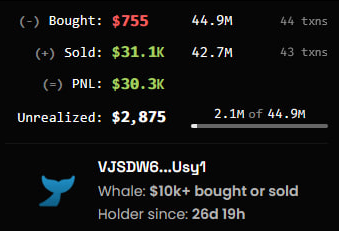
This is the type of conviction we need in the trenches again https://t.co/6pvyqTLkpk

♥ 39 · 🔁 2 · 👁 767 · View →

allincrypto 熬鹰资本 🇨🇳 @thankUcrypto · 00:00
特朗普称已取消威特科夫和库什纳前往巴基斯坦的行程
据美国方面25日消息,美国总统特朗普当天称,已取消总统特使威特科夫和女婿库什纳前往巴基斯坦与伊朗谈判的行程。(央视新闻)
(来自金十数据APP)
得了,没得谈了,给我跌!
据美国方面25日消息,美国总统特朗普当天称,已取消总统特使威特科夫和女婿库什纳前往巴基斯坦与伊朗谈判的行程。(央视新闻)
(来自金十数据APP)
得了,没得谈了,给我跌!
♥ 7 · 👁 743 · View →

PP @0xphilo · 23:56
做ai创业的第10天
美丽的增长曲线
现在一天有6.5w的销售额了
谢谢各位老板的支持
这个月争取日销售额达到30w https://t.co/0nj10Do2bY
美丽的增长曲线
现在一天有6.5w的销售额了
谢谢各位老板的支持
这个月争取日销售额达到30w https://t.co/0nj10Do2bY


♥ 2 · 👁 80 · View →
CryptoCat|猫姐🐈 @Crypto_Cat888 · 23:59
RT @Yi_chen789: 感谢 @Crypto_Cat888 猫姐推荐,PVP是P不过年轻人了,但是我能拿啊,最近BSC上的地推盘别说还有点厉害,这个Sun一听名字就很正能量。
我刚买了一点,火星主动燃烧➕屎壳郎分红lp
Ca: 0x522d075ee59c1…
我刚买了一点,火星主动燃烧➕屎壳郎分红lp
Ca: 0x522d075ee59c1…
🔁 1 · View →
jesse.base.eth @jessepollak · 23:47
RT @_ChrisOketch: The goal is to build a global Fintech startup that can scale and grow on @base beyond borders.
🔁 5 · 👁 1 · View →
23:03 · 12 tweets
Watcher.Guru @WatcherGuru · 22:54
JUST IN: Sanctioned ships continue to pass through the Strait of Hormuz despite US blockade, NBC reports.
♥ 302 · 🔁 20 · 👁 14710 · View →
Binance @binance · 23:00
This is what conviction looks like. https://t.co/mpDXx9obbv

♥ 48 · 🔁 1 · 👁 2512 · View →
Sweep @0xSweep · 22:55
One crew made $82,000 by CRASHING into random people
Jaime Huiracocha was a 53 year old guy from Brooklyn who ran a small crew faking car crashes on New York City highways for insurance money
They would meet a group at a medical clinic in East New York and offer them thousands of dollars to crash a car, then drive everyone to the Belt Parkway in 4 different cars with the drivers wearing headphones to communicate during the hit
His partner Victor Murillo was always behind the wheel of the lead car while the others held a black plastic tarp ready
Once they picked a victim on the highway, Murillo would cut them off, slam the brakes, force them into a crash, then quickly swap seats with a passenger while the tarp covered the back window so the victim couldn't see
A woman would step out of the driver's seat acting confused while Murillo slipped into a second car waiting in front and disappeared
Their insurance company paid out over $82,000 in injury claims across the first 2 crashes before the 3rd one made them famous
Their last victim Asphia Natasha had front and rear dashcams, and her video of the entire setup
Cops arrested Maikel Martinez, the guy who lied that his wife was driving, weeks later at JFK as he flew back from Ecuador, and a year of investigation tracked the whole operation back to Huiracocha and Murillo
They each face 5 to 15 years in prison
The entire ring was killed by a $100 dashcam
Jaime Huiracocha was a 53 year old guy from Brooklyn who ran a small crew faking car crashes on New York City highways for insurance money
They would meet a group at a medical clinic in East New York and offer them thousands of dollars to crash a car, then drive everyone to the Belt Parkway in 4 different cars with the drivers wearing headphones to communicate during the hit
His partner Victor Murillo was always behind the wheel of the lead car while the others held a black plastic tarp ready
Once they picked a victim on the highway, Murillo would cut them off, slam the brakes, force them into a crash, then quickly swap seats with a passenger while the tarp covered the back window so the victim couldn't see
A woman would step out of the driver's seat acting confused while Murillo slipped into a second car waiting in front and disappeared
Their insurance company paid out over $82,000 in injury claims across the first 2 crashes before the 3rd one made them famous
Their last victim Asphia Natasha had front and rear dashcams, and her video of the entire setup
Cops arrested Maikel Martinez, the guy who lied that his wife was driving, weeks later at JFK as he flew back from Ecuador, and a year of investigation tracked the whole operation back to Huiracocha and Murillo
They each face 5 to 15 years in prison
The entire ring was killed by a $100 dashcam
♥ 18 · 🔁 2 · 👁 410 · View →

潜水观察员🇨🇳 @connectfarm1 · 22:57
准备打点 $print,估计分不了多少,纯粹理财局,赚多赚少的问题,因为我知道很多人的拿货价格比这一轮社区轮的估值要高,kyc 有要求,但是我知道对你们来说不难
♥ 7 · 👁 692 · View →
爱因斯坦一撇 @EinsteinYipie · 23:01
$FreedomofMoney 给个回本的机会吧,这次我一定跑,求求了 @cz_binance https://t.co/ac1yDtHRPP

♥ 1 · 👁 46 · View →

TCC @TCryptochicks · 22:56
Hey @grok, make it neat, but keep every item. https://t.co/VfAyauBKc5

♥ 1 · 👁 67 · View →

BuLL 牛 @bull_bnb · 22:55
RT @bull_bnb: If $APE keeps sending after 4 years of brutal downtrend
The first thing you should be looking at is memes on Apechain
I've…
The first thing you should be looking at is memes on Apechain
I've…
🔁 51 · View →
BuLL 牛 @bull_bnb · 22:55
RT @bull_bnb: Traced the wallet. DOOKEY devs pulled LP but $Curtis is the only ticker they've held since 2024. If anything on this chain de…
🔁 49 · View →
22:03 · 5 tweets

DD 滴滴./ @rtk17025 · 21:43
加入 @arc discord 也一段时间,从社区成员的视角跟大家分享目前
可以做什么
以及
项目进展
第一部分:
目前「可以做哪些」行动指南
这部分主要针对一般用户与早期参与者,透过参与官方活动与测试网,累积早期贡献度,未来极有机会转换为实质权益或潜在的空投奖励。
1. 参与 Arc House 与 Architects 积分计画(零成本累积贡献)
这是一个透过每日社群互动来赚取积分的系统。
积分达到特定门槛(如 500 分)即可申请「建筑师」角色,解锁更多社群权益与专属 Discord 频道门票。
一次性任务:
註册与建档: 透过官网使用信箱(目前已开放google)註册,并点击右上角「Edit Profile」完善个人资料,可直接获得 100 积分。
每日必做日常(每日最高可得 60 积分):
登入签到: 每天登入获取 5 积分。
阅读文章: 在左侧「Content」区块阅读 5 篇文章(每篇 5 分,共 25 积分)。
观看影片: 在「Content」区块观看 1 个短影音(5 积分)。
报名活动: 在「Events」区块查看并 Register 新活动(每个 5 积分)。
发布贴文: 在「Discussions」区块发布 1 篇主题贴文(10 积分)。
参与讨论: 评论 2 篇其他人的贴文(10 积分)。
2. 进行 ARC 测试网链上交互(进阶探索)
除了社群积分,直接在测试网上留下交易纪录,更是证明你身为早期用户的硬实力。
这些操作完全免费,使用的是测试用的虚拟代币。
领取测试水: 前往 Circle 官方水龙头(https://t.co/5jhfhr48VV)领取测试用的 USDC,作为支付手续费的燃料。
发送链上问候: 透过专属网站(https://t.co/jOcqbFxgpE)在 ARC 测试网上发送 GM(Good Morning),完成一笔基础的转帐交易。
部署智能合约: 透过工具网站(https://t.co/y2RyJ7W4A3)一键部署合约。
这听起来很技术,但透过第三方介面,只需点击按钮即可完成,能大幅增加你的链上活跃权重。
꒰ঌ┈┈┈┈┈┈┈┈┈┈┈┈໒꒱
第二部分:
ARC 项目进度与技术现况
ARC 是由发行全美最大合规稳定币 USDC 的母公司 Circle 所开发,定位为「网际网路经济作业系统」。
简单来说,它是一条专门为稳定币和机构级金融交易量身打造的区块链。
1. 整体开发与上线进度
当前阶段: 目前正处于**公开测试网(Public Testnet)**阶段。
这代表基础设施已经搭建完毕,正在让开发者与用户进行压力测试与找 bug。
主网目标: 预计于 2026 年正式上线主网。
2. 核心技术落地进度(白话解析)
App Kits 开发工具包上线: 官方近期释出了 App Kits,让开发者可以用极少的程式码(不到 10 行)就把应用程式连接到 ARC 网络。
这大幅降低了开发门槛,有利于生态快速扩张。
实现「确定性最终性」: 传统区块链(如比特币)的交易需要等待多个区块确认才算安全,ARC 採用了 Malachite 共识引擎,让交易在 1 秒内即可完成且绝对不可逆,完全符合传统金融机构对结算速度的严苛要求。
抗量子攻击路线图启动: 为了防范未来量子电脑可能破解区块链密码学的风险,ARC 已经公布了 4 阶段的防护升级计画。
在主网上线时,就会直接启用具备抗量子能力的钱包签名防护,技术思维非常超前。
3. 生态系扩展与合作进度
机构大规模进驻: 测试网目前已吸引超过 100 家机构参与,涵盖各大稳定币发行商、顶级去中心化交易所(Uniswap、Curve)、知名钱包(MetaMask)以及基础设施服务商(Alchemy、Chainlink)。
黑客松成果丰硕: 近期的 ETHGlobal Cannes 黑客松吸引了 68 个团队在 ARC 上开发应用,并诞生了如「音乐微支付」与「AI 代理支付」等实用度极高的专案。
应用场景落地: 目前已经开始整合 Morpho 协议来实现链上稳定币储蓄功能,并且正在测试 <500 毫秒的极速跨链技术。
4. 代币与治理进度
确认发行原生代币: Circle 创办人已公开确认,ARC 网络未来将会发行专属的原生代币,主要用于网络治理与生态激励。
经济模型探索中: 目前尚未公布总供应量、分配比例或具体时间表。
官方正在评估未来可能支援质押(Staking)并转向权益证明(PoS)机制的可能性。
可以做什么
以及
项目进展
第一部分:
目前「可以做哪些」行动指南
这部分主要针对一般用户与早期参与者,透过参与官方活动与测试网,累积早期贡献度,未来极有机会转换为实质权益或潜在的空投奖励。
1. 参与 Arc House 与 Architects 积分计画(零成本累积贡献)
这是一个透过每日社群互动来赚取积分的系统。
积分达到特定门槛(如 500 分)即可申请「建筑师」角色,解锁更多社群权益与专属 Discord 频道门票。
一次性任务:
註册与建档: 透过官网使用信箱(目前已开放google)註册,并点击右上角「Edit Profile」完善个人资料,可直接获得 100 积分。
每日必做日常(每日最高可得 60 积分):
登入签到: 每天登入获取 5 积分。
阅读文章: 在左侧「Content」区块阅读 5 篇文章(每篇 5 分,共 25 积分)。
观看影片: 在「Content」区块观看 1 个短影音(5 积分)。
报名活动: 在「Events」区块查看并 Register 新活动(每个 5 积分)。
发布贴文: 在「Discussions」区块发布 1 篇主题贴文(10 积分)。
参与讨论: 评论 2 篇其他人的贴文(10 积分)。
2. 进行 ARC 测试网链上交互(进阶探索)
除了社群积分,直接在测试网上留下交易纪录,更是证明你身为早期用户的硬实力。
这些操作完全免费,使用的是测试用的虚拟代币。
领取测试水: 前往 Circle 官方水龙头(https://t.co/5jhfhr48VV)领取测试用的 USDC,作为支付手续费的燃料。
发送链上问候: 透过专属网站(https://t.co/jOcqbFxgpE)在 ARC 测试网上发送 GM(Good Morning),完成一笔基础的转帐交易。
部署智能合约: 透过工具网站(https://t.co/y2RyJ7W4A3)一键部署合约。
这听起来很技术,但透过第三方介面,只需点击按钮即可完成,能大幅增加你的链上活跃权重。
꒰ঌ┈┈┈┈┈┈┈┈┈┈┈┈໒꒱
第二部分:
ARC 项目进度与技术现况
ARC 是由发行全美最大合规稳定币 USDC 的母公司 Circle 所开发,定位为「网际网路经济作业系统」。
简单来说,它是一条专门为稳定币和机构级金融交易量身打造的区块链。
1. 整体开发与上线进度
当前阶段: 目前正处于**公开测试网(Public Testnet)**阶段。
这代表基础设施已经搭建完毕,正在让开发者与用户进行压力测试与找 bug。
主网目标: 预计于 2026 年正式上线主网。
2. 核心技术落地进度(白话解析)
App Kits 开发工具包上线: 官方近期释出了 App Kits,让开发者可以用极少的程式码(不到 10 行)就把应用程式连接到 ARC 网络。
这大幅降低了开发门槛,有利于生态快速扩张。
实现「确定性最终性」: 传统区块链(如比特币)的交易需要等待多个区块确认才算安全,ARC 採用了 Malachite 共识引擎,让交易在 1 秒内即可完成且绝对不可逆,完全符合传统金融机构对结算速度的严苛要求。
抗量子攻击路线图启动: 为了防范未来量子电脑可能破解区块链密码学的风险,ARC 已经公布了 4 阶段的防护升级计画。
在主网上线时,就会直接启用具备抗量子能力的钱包签名防护,技术思维非常超前。
3. 生态系扩展与合作进度
机构大规模进驻: 测试网目前已吸引超过 100 家机构参与,涵盖各大稳定币发行商、顶级去中心化交易所(Uniswap、Curve)、知名钱包(MetaMask)以及基础设施服务商(Alchemy、Chainlink)。
黑客松成果丰硕: 近期的 ETHGlobal Cannes 黑客松吸引了 68 个团队在 ARC 上开发应用,并诞生了如「音乐微支付」与「AI 代理支付」等实用度极高的专案。
应用场景落地: 目前已经开始整合 Morpho 协议来实现链上稳定币储蓄功能,并且正在测试 <500 毫秒的极速跨链技术。
4. 代币与治理进度
确认发行原生代币: Circle 创办人已公开确认,ARC 网络未来将会发行专属的原生代币,主要用于网络治理与生态激励。
经济模型探索中: 目前尚未公布总供应量、分配比例或具体时间表。
官方正在评估未来可能支援质押(Staking)并转向权益证明(PoS)机制的可能性。

♥ 6 · 👁 240 · View →
21:03 · 5 tweets

挖矿小企鹅|进群私信 @Goupenguin · 20:56
两年前敌鸽让我梭哈19美元的英特尔。
我不仅没买,还跟个傻逼似的在那《尊嘟假嘟》
今天因特尔84了。 https://t.co/b0FXff4fWZ
我不仅没买,还跟个傻逼似的在那《尊嘟假嘟》
今天因特尔84了。 https://t.co/b0FXff4fWZ

♥ 5 · 👁 371 · View →

旧亿 @cryptojiuyi · 20:53
有个问题你可能没意识到,如果不是她妈妈跟这个主持人继续传播Liv的梦想,不会有推特这个提问,也不会有 $ASTEROID 的吉祥物得到musk的回应。
我觉得支持 @rebeccaperrotto 就是对她女儿的支持,她愿意拿sol收到的手续费 @BagsApp 成立基金会继续传播女儿的梦想和帮助更多的人实现梦想,而不是单纯炒作,我觉得这或许是最好的答案!
后续关于吉祥物的事,不免会跟她妈妈产生联系,不管是这个主持人还是其他媒体,这是必然的,她妈妈也不是商人是个善良的母亲,我觉得会发挥出这笔钱该有的作用!
我觉得支持 @rebeccaperrotto 就是对她女儿的支持,她愿意拿sol收到的手续费 @BagsApp 成立基金会继续传播女儿的梦想和帮助更多的人实现梦想,而不是单纯炒作,我觉得这或许是最好的答案!
后续关于吉祥物的事,不免会跟她妈妈产生联系,不管是这个主持人还是其他媒体,这是必然的,她妈妈也不是商人是个善良的母亲,我觉得会发挥出这笔钱该有的作用!
♥ 2 · 👁 692 · View →

Te amo ☆🧲 @yaozong521 · 20:52
3x
太顶级了
ca
0x282133187ee2c471a562c5617d87ec55e19499f0 https://t.co/rUEqdeJKyY
太顶级了
ca
0x282133187ee2c471a562c5617d87ec55e19499f0 https://t.co/rUEqdeJKyY

♥ 2 · 🔁 1 · 👁 232 · View →
吴说区块链 @wublockchain12 · 20:43
据链上分析师 Specter 监测,衍生品交易平台 Tradoor 的代币 TRADOOR 疑似存在高度操纵和清洗交易。数据显示,TRADOOR 自 2026 年 3 月以来涨幅一度达 900%,但在本日 02:00 至 02:30(UTC+8),其价格在短短 30 分钟内暴跌 90%。分析师指出,团队主钱包控制了 70.12% 的供应量,曾将 1793 万枚 TRADOOR 分发至十余个关联地址,并在 2025 年 9 月 19 日至 21 日期间,部分地址进行了明显的清洗交易。自 2025 年 11 月以来,多个与团队关联的钱包向 Bitget 充值。分析师猜测,Bitget 平台上持有的 11% 供应量可能实际由 Tradoor 团队或其关联方控制。 https://t.co/1pWJPxiz9V

♥ 1 · 👁 547 · View →

20:03 · 6 tweets
Binance @binance · 20:01
Last call.
April’s Challenge ends soon - you can join to claim your share of 100,000 USDC in token vouchers.
Don’t miss it 👇
https://t.co/ux9mWKgGnP https://t.co/Es3wxIwT6h
April’s Challenge ends soon - you can join to claim your share of 100,000 USDC in token vouchers.
Don’t miss it 👇
https://t.co/ux9mWKgGnP https://t.co/Es3wxIwT6h

♥ 34 · 🔁 3 · 👁 1255 · View →
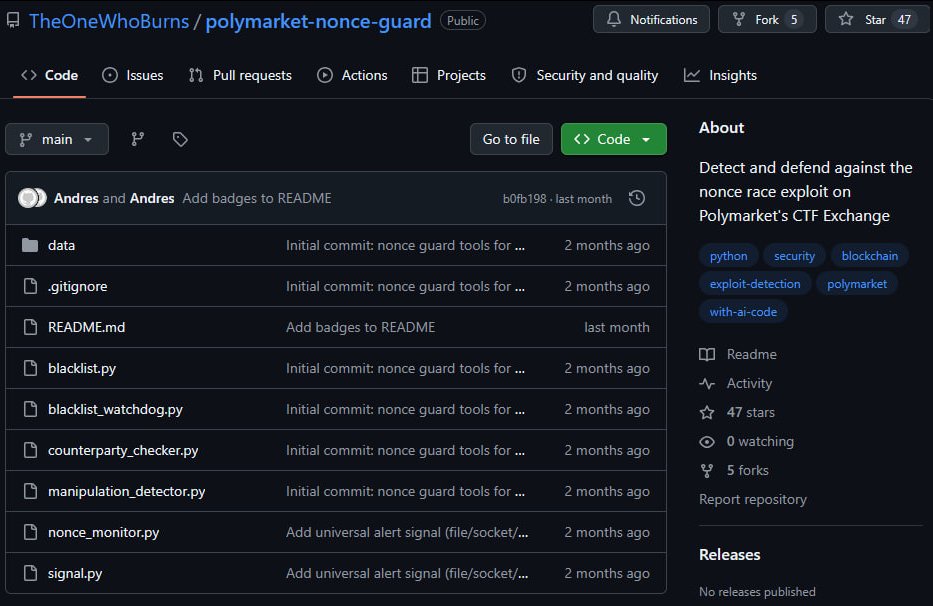
Sweep @0xSweep · 19:46
Someone found a way to wipe out Polymarket market makers with 10 cents per attack
Polymarket matches trades on an off chain order book, then settles them on chain seconds later
The gap between those two systems is the exploit
A trader places a trade against a market maker bot and the API confirms the fill instantly, but before anything hits the blockchain he cancels the trade on chain
The bot already hedged a position that never existed and now the attacker takes the free money
10 cents in gas per attack, 50 seconds per cycle, one wallet pulled $16,427 in a single day
It's called Ghost Fills and Polymarket still hasn't fixed it, so a dev built an open source tool called Nonce Guard to defend against it himself
Polymarket matches trades on an off chain order book, then settles them on chain seconds later
The gap between those two systems is the exploit
A trader places a trade against a market maker bot and the API confirms the fill instantly, but before anything hits the blockchain he cancels the trade on chain
The bot already hedged a position that never existed and now the attacker takes the free money
10 cents in gas per attack, 50 seconds per cycle, one wallet pulled $16,427 in a single day
It's called Ghost Fills and Polymarket still hasn't fixed it, so a dev built an open source tool called Nonce Guard to defend against it himself

♥ 23 · 🔁 3 · 👁 563 · View →
allincrypto 熬鹰资本 🇨🇳 @thankUcrypto · 19:46
这里axs压力太大了,估计1.775是日内大顶,空了点儿试试,最近狗运还不错。
♥ 9 · 👁 1961 · View →

EnHeng嗯哼.Ai @EnHeng456 · 20:02
原定的美国行程有突发情况,没能见到Trump懂王,算是这次的一点小遗憾
人生路上,很多结果未必由我们决定,世事自有安排,不必为了错过的风景过度执着
当下加密与AI的核心浪潮,主场正在转向亚洲,香港会是最重要的落脚点之一
接下来会深耕香港,专注加密投资与AI钻研,稳步前行,继续向上。也欢迎朋友们线下交流,一起抓住新的机会
人生路上,很多结果未必由我们决定,世事自有安排,不必为了错过的风景过度执着
当下加密与AI的核心浪潮,主场正在转向亚洲,香港会是最重要的落脚点之一
接下来会深耕香港,专注加密投资与AI钻研,稳步前行,继续向上。也欢迎朋友们线下交流,一起抓住新的机会
♥ 2 · View →
吴说区块链 @wublockchain12 · 19:42
《邱达根:相比美国监管的政治不确定性,香港 Web3 政策的核心优势在于连续性》
香港 Web3 监管强调渐进稳健:通过 VASP 许可、稳定币沙盒与《政策声明 2.0》实现路线图,强调监管明确性与跨机构协作;对比美 GENIUS 稳定币法案,提出数字商品等分类与初创安全港设想。行业参与者包括 ZA Bank、HSBC、Franklin Templeton 等,代币化未来广泛扩展;面临周期测试、量子威胁与跨法域互联挑战,倡导全球基建与互认,形成 Web3 的“飞轮效应”。 阅读全文:https://t.co/503WDQcCKo
香港 Web3 监管强调渐进稳健:通过 VASP 许可、稳定币沙盒与《政策声明 2.0》实现路线图,强调监管明确性与跨机构协作;对比美 GENIUS 稳定币法案,提出数字商品等分类与初创安全港设想。行业参与者包括 ZA Bank、HSBC、Franklin Templeton 等,代币化未来广泛扩展;面临周期测试、量子威胁与跨法域互联挑战,倡导全球基建与互认,形成 Web3 的“飞轮效应”。 阅读全文:https://t.co/503WDQcCKo
♥ 2 · 👁 389 · View →
CryptoCat|猫姐🐈 @Crypto_Cat888 · 19:50
RT @shanheBTC888: $SUN
有东西
真的有东西
地推介入........
0x522d075ee59c11e31dcdce445b15e52a72027777 https://t.co/gFhpha94gf
有东西
真的有东西
地推介入........
0x522d075ee59c11e31dcdce445b15e52a72027777 https://t.co/gFhpha94gf

🔁 3 · View →
19:02 · 1 tweets
allincrypto 熬鹰资本 🇨🇳 @thankUcrypto · 18:51
不是我说啊,纯感觉,朋友说的,叠好甲。
付鹏的投资理解以及投资能力综合水平远弱于易理华。@Jackyi_ld
付鹏的投资理解以及投资能力综合水平远弱于易理华。@Jackyi_ld
♥ 17 · 👁 1487 · View →
18:02 · 1 tweets
17:02 · 6 tweets
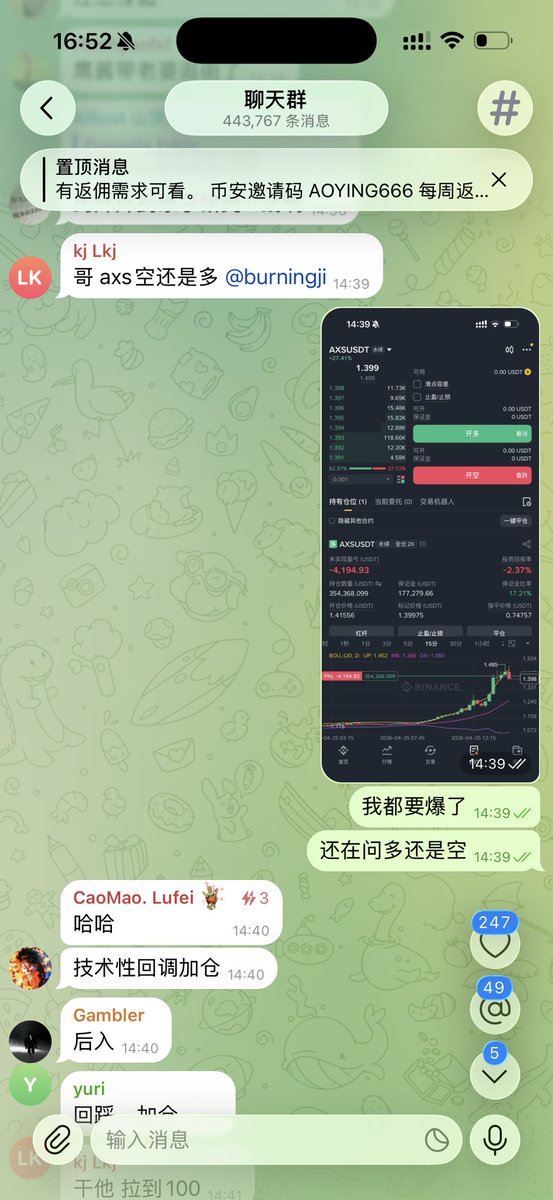
allincrypto 熬鹰资本 🇨🇳 @thankUcrypto · 16:55
还在我喊涨的。 。
我特么买进去发条推特立马两根大阴线来浇我,我特么都快气死了还能咋滴。
然后涨二段了,又来说我喊起来的了,要是我能喊起来就该发完推就拉20%。
承认一下哥们选山寨币的审美好就这么难?
跑点儿了,自己看着玩儿。 https://t.co/vm29Psr5oP
我特么买进去发条推特立马两根大阴线来浇我,我特么都快气死了还能咋滴。
然后涨二段了,又来说我喊起来的了,要是我能喊起来就该发完推就拉20%。
承认一下哥们选山寨币的审美好就这么难?
跑点儿了,自己看着玩儿。 https://t.co/vm29Psr5oP
♥ 9 · 👁 1083 · View →
潜水观察员🇨🇳 @connectfarm1 · 16:42
奇怪了,不知道为啥404了,有没有牛逼的回答下,我问了ai ,不知道是不是这个原因,有人又已经跑起来了 https://t.co/fSV4S5A7se


♥ 5 · 👁 2114 · View →

Huang 黄 @Huang2024 · 16:59
买了点 $OP 市值5.5亿u
最近因为 $Asteriod 唤醒了Eth链
不仅带动了Eth链Memecoin
甚至连带NFT都有点焕发第二春的意思
Gamefi板块也受到流动性溢出影响
以太坊二层势必也会是轮动的板块
而 $OP 是最近唯一有利好面的二层代币
Ethfi迁移至op TVL暴涨
目前市值又是底部 好价格 非常值得买入✓ https://t.co/pEuXluau1J
最近因为 $Asteriod 唤醒了Eth链
不仅带动了Eth链Memecoin
甚至连带NFT都有点焕发第二春的意思
Gamefi板块也受到流动性溢出影响
以太坊二层势必也会是轮动的板块
而 $OP 是最近唯一有利好面的二层代币
Ethfi迁移至op TVL暴涨
目前市值又是底部 好价格 非常值得买入✓ https://t.co/pEuXluau1J

♥ 3 · 👁 146 · View →
DD 滴滴./ @rtk17025 · 17:00
没想到自己测出来最像的居然是 @ohyishi
来展示一下自己的Classic吧
至今一直认为
这是最美的钱包 https://t.co/Mdc7uttJar
来展示一下自己的Classic吧
至今一直认为
这是最美的钱包 https://t.co/Mdc7uttJar


♥ 1 · 👁 32 · View →


16:02 · 6 tweets

BULL @bull_bnb · 15:40
Every chain is a casino these days.
Every memecoin is a slot machine.
Nobody walks into an empty casino.
What fills it?
One winner screaming at the slot machine while everyone watches.
$SOL was an empty casino in 2023.
Then $BONK printed millionaires.
Screenshots spread.
“Bro just turned 50 into $2M on Solana.
Suddenly every degen on earth rushed in.
$BNB was a ghost town in 2025.
A few runners went parabolic.
Screenshots spread.
Casino filled overnight.
$ETH had $ASTEROID last week.
One guy turned 1 ETH into $474K in 3 hours.
Now everyone wants back on ETH.
It’s not about the chain.
It’s not about the tech.
It’s about the SCREENSHOTS
One lifechanging trade screenshot does more for a chain than a billion-dollar partnership.
Now look at $APE.
Bottomed at $0.08 after 99.7% down.
18 months of “dead chain.”
Unlocks finished March 2026.
100% circulating.
It just pumped 300% in a day.
SOL had 40M tokens hanging over it from the FTX estate and still did 36x.
APE has no anchor at all.
The casino just turned the lights back on.
The slot machines are warming up.
The only question is:
Which machine prints the first screenshot?
I’m not telling you which machine to play.
I’m telling you the casino just opened.
Study the pattern.
Every memecoin is a slot machine.
Nobody walks into an empty casino.
What fills it?
One winner screaming at the slot machine while everyone watches.
$SOL was an empty casino in 2023.
Then $BONK printed millionaires.
Screenshots spread.
“Bro just turned 50 into $2M on Solana.
Suddenly every degen on earth rushed in.
$BNB was a ghost town in 2025.
A few runners went parabolic.
Screenshots spread.
Casino filled overnight.
$ETH had $ASTEROID last week.
One guy turned 1 ETH into $474K in 3 hours.
Now everyone wants back on ETH.
It’s not about the chain.
It’s not about the tech.
It’s about the SCREENSHOTS
One lifechanging trade screenshot does more for a chain than a billion-dollar partnership.
Now look at $APE.
Bottomed at $0.08 after 99.7% down.
18 months of “dead chain.”
Unlocks finished March 2026.
100% circulating.
It just pumped 300% in a day.
SOL had 40M tokens hanging over it from the FTX estate and still did 36x.
APE has no anchor at all.
The casino just turned the lights back on.
The slot machines are warming up.
The only question is:
Which machine prints the first screenshot?
I’m not telling you which machine to play.
I’m telling you the casino just opened.
Study the pattern.
♥ 155 · 🔁 54 · 👁 4905 · View →

Binance Wallet @BinanceWallet · 15:45
🫡 Check out the latest updates in #Binance Wallet !
• Filter topics by label and save them as notification preferences
• View dApp signature history in Signature Records for full traceability
• Buy or sell Solana tokens across multiple wallets on DEX Web
• Manage multi-chain accounts with a single seed phrase
• Search by name, address, or group to quickly find wallet accounts
👉 Try out: https://t.co/2DEBpokxno
💬 Share your feedback below!
• Filter topics by label and save them as notification preferences
• View dApp signature history in Signature Records for full traceability
• Buy or sell Solana tokens across multiple wallets on DEX Web
• Manage multi-chain accounts with a single seed phrase
• Search by name, address, or group to quickly find wallet accounts
👉 Try out: https://t.co/2DEBpokxno
💬 Share your feedback below!
♥ 25 · 👁 2119 · View →

币安Binance华语 @binancezh · 15:48
🫡 尊敬的币安钱包产品体验官,本周更新请查收:
• 移动端热点雷达支持按标签筛选话题
• 在签名记录中查看 dApp 消息签名历史
• 在网页端一键完成多钱包 Solana 代币交易
• 插件端支持钱包助记词派生
• 插件端支持按名称、地址或账户组搜索
👉 立即体验: https://t.co/fLgTn3O9WW
💬 更多建议欢迎评论区见!
• 移动端热点雷达支持按标签筛选话题
• 在签名记录中查看 dApp 消息签名历史
• 在网页端一键完成多钱包 Solana 代币交易
• 插件端支持钱包助记词派生
• 插件端支持按名称、地址或账户组搜索
👉 立即体验: https://t.co/fLgTn3O9WW
💬 更多建议欢迎评论区见!
♥ 16 · 🔁 1 · 👁 1197 · View →

加密韋馱|Skanda 🔶 @thecryptoskanda · 15:52
再次Call back一下妖币策略研究
随着西方KOL的FUD潮,很多妖币正好借势下班 - 做空策略的牛市到了,我们的妖币策略养蛊,也迎来了最终的胜利者:
V4A-Flash 闪崩策略
策略原理:
- 根本假设:妖币庄的资金有成本,不会在趋势形成时逆势操作消耗资金。所以一旦下跌势头形成,不会硬接,只能闪崩
- 选币观察:将所有币种根据上币时间和vesting分组
1. 还没开始或者没怎么解锁的VC币
2. 接近全流通的meme
3. 解锁期内持续抛压的VC币
4.大额已经解锁完了的VC币
并根据历史表现,ban掉其中交易量低的币种、接近全流通的币种
- 入场逻辑:
1. 24H累计涨幅
2. 4H多头衰竭
3. 1H lower high确认
- 出场逻辑:
1. 方向对了但是出现反弹苗头 - trail
2. 宽止损
3. 8H到期自动平仓应对误入震荡区间
实盘小资金测试 $500 1x空单结果如下:昨天抓到了 $Tradoor 闪崩。其他时间触发频率可观,止损也基本上没有被打到过(如图)
关键变量因素:
其实是选币。选币逻辑中的ban名单的交易量等数据是随时间会一直变化的,需要不断更新并回测。为此搭建了一整套的数据收集脚本
为什么之前的V4A和V8都失败了?
V4A:
跌破2个1H支撑位后做空
当时的回测研究犯了一个错误:30m和1H线在实际执行中并不存在,你执行能用的永远都是当下实盘的市价
而回测的时候我们使用了大量24年甚至更早的数据,对现在的交易情况其实是没有参考价值的
最终在实测中出现严重漂移,V2版本V4A平均PNL -1.68%
V8:
OI持续下跌但是价格仍保持或者略微上涨时做空
这个策略的问题在于实盘中打到止损的情况比回测要多2.5x。很明显当时的V8是一个具体时期内的价格修正,而不是一个可执行的策略,只能当信号用
被停牌前战绩平均PNL -1.13%
我会将V4AF以信号的形式小范围部分开放给 @Hertzflow_xyz 社区
接下来我们将继续对美股进行妖股操盘策略研究。因为我们在初步回测中发现,美股中存在大量高控股,且数据中呈现出惊人的与妖币策略的回测一致性(货源归边)。
这样的一致性在最近的AVIS租车和之前香港鞋股中也能得到一定的实盘支持
我们将持续更新
随着西方KOL的FUD潮,很多妖币正好借势下班 - 做空策略的牛市到了,我们的妖币策略养蛊,也迎来了最终的胜利者:
V4A-Flash 闪崩策略
策略原理:
- 根本假设:妖币庄的资金有成本,不会在趋势形成时逆势操作消耗资金。所以一旦下跌势头形成,不会硬接,只能闪崩
- 选币观察:将所有币种根据上币时间和vesting分组
1. 还没开始或者没怎么解锁的VC币
2. 接近全流通的meme
3. 解锁期内持续抛压的VC币
4.大额已经解锁完了的VC币
并根据历史表现,ban掉其中交易量低的币种、接近全流通的币种
- 入场逻辑:
1. 24H累计涨幅
2. 4H多头衰竭
3. 1H lower high确认
- 出场逻辑:
1. 方向对了但是出现反弹苗头 - trail
2. 宽止损
3. 8H到期自动平仓应对误入震荡区间
实盘小资金测试 $500 1x空单结果如下:昨天抓到了 $Tradoor 闪崩。其他时间触发频率可观,止损也基本上没有被打到过(如图)
关键变量因素:
其实是选币。选币逻辑中的ban名单的交易量等数据是随时间会一直变化的,需要不断更新并回测。为此搭建了一整套的数据收集脚本
为什么之前的V4A和V8都失败了?
V4A:
跌破2个1H支撑位后做空
当时的回测研究犯了一个错误:30m和1H线在实际执行中并不存在,你执行能用的永远都是当下实盘的市价
而回测的时候我们使用了大量24年甚至更早的数据,对现在的交易情况其实是没有参考价值的
最终在实测中出现严重漂移,V2版本V4A平均PNL -1.68%
V8:
OI持续下跌但是价格仍保持或者略微上涨时做空
这个策略的问题在于实盘中打到止损的情况比回测要多2.5x。很明显当时的V8是一个具体时期内的价格修正,而不是一个可执行的策略,只能当信号用
被停牌前战绩平均PNL -1.13%
我会将V4AF以信号的形式小范围部分开放给 @Hertzflow_xyz 社区
接下来我们将继续对美股进行妖股操盘策略研究。因为我们在初步回测中发现,美股中存在大量高控股,且数据中呈现出惊人的与妖币策略的回测一致性(货源归边)。
这样的一致性在最近的AVIS租车和之前香港鞋股中也能得到一定的实盘支持
我们将持续更新
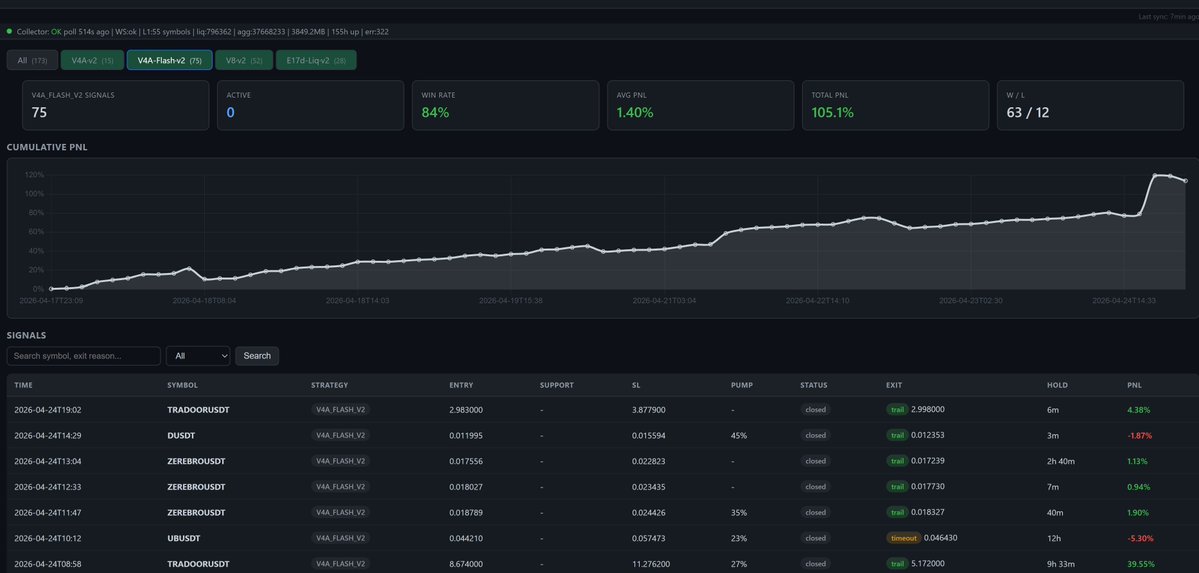
♥ 5 · 👁 495 · View →


15:01 · 7 tweets

Cos(余弦)😶🌫️ @evilcos · 14:58
在 Hermes Agent 上配套 DeepSeek V4 Pro 模型,链上安全分析能力已经很令我满意了…三笔近期的攻击,复杂度从中等到普通到简单。mark 下。 https://t.co/DTX4ii3C8w


♥ 3 · 👁 168 · View →

Forest🌳 @CyptoForest · 14:46
$imagine 快 3x 了。
老马刚刚自己发了一遍 grok 生成的 imagine 视频,然后又开始转发其他大 v 的相关推文。
感觉又回到了当初 $CHIBI 和 $ani 刚出来那会儿,老马逮着一个叙事疯狂互动。
等后续更多 imagine 视频内容出来,老马肯定会继续互动。
0x4393b54385e91824a2ae5dfd35e226a3313a1a18
继续关注。
老马刚刚自己发了一遍 grok 生成的 imagine 视频,然后又开始转发其他大 v 的相关推文。
感觉又回到了当初 $CHIBI 和 $ani 刚出来那会儿,老马逮着一个叙事疯狂互动。
等后续更多 imagine 视频内容出来,老马肯定会继续互动。
0x4393b54385e91824a2ae5dfd35e226a3313a1a18
继续关注。


♥ 3 · 👁 354 · View →


CZ 🔶 BNB @cz_binance · 14:51
RT @durov: 41 kidnappings of crypto holders in France in 3.5 months of 2026.
Why?
🥖 French tax officials selling crypto owners' data to c…
Why?
🥖 French tax officials selling crypto owners' data to c…
🔁 4809 · View →

14:01 · 4 tweets
13:01 · 11 tweets

潜水观察员🇨🇳 @connectfarm1 · 12:57
原来被人使用自己的开源代码的感觉是这样子的,满足感拉满,今天下午会再把一个更加早期能抓到妖币的工具开源了。
另外很多朋友说不会用,那只能证明你还没有部署自己的ai ,甚至还有朋友问是不是免费的,只能说我的天呀,另外还没有部署自己ai 的可以看这个帖子,我一个50岁的中年男人都能用手机部署ai ,你们这些年轻人怎么那么懒。
https://t.co/qFktJPxm7b
另外很多朋友说不会用,那只能证明你还没有部署自己的ai ,甚至还有朋友问是不是免费的,只能说我的天呀,另外还没有部署自己ai 的可以看这个帖子,我一个50岁的中年男人都能用手机部署ai ,你们这些年轻人怎么那么懒。
https://t.co/qFktJPxm7b
♥ 3 · 👁 490 · View →
挖矿小企鹅|进群私信 @Goupenguin · 12:53
感谢全球首富给我的仨瓜俩枣,
昨天空了一单赚了90个月的推特工资 https://t.co/ZUoyi9genT
昨天空了一单赚了90个月的推特工资 https://t.co/ZUoyi9genT

♥ 3 · 👁 371 · View →

Y @yueya_eth · 12:51
RT @42space: icymi: @printr keeps on printing.
$BELIEF is up bad.
> printr hit #3 in launchpad market share
> $BELIEF is their first proof…
$BELIEF is up bad.
> printr hit #3 in launchpad market share
> $BELIEF is their first proof…
🔁 15 · View →
Watcher.Guru @WatcherGuru · 12:47
RT @WatcherGuru: JUST IN: Telegram Founder Pavel Durov accuses French tax officials of selling crypto owners' data, leading to 41 kidnappin…
🔁 886 · View →
12:01 · 8 tweets
allincrypto 熬鹰资本 🇨🇳 @thankUcrypto · 11:47
一直没看推特收入,明明绑了卡,但是钱却没被发到卡里,很奇怪。
这次不知道算法咋回事,两周给了1000U,也没发多勤快。 。 https://t.co/5zMPuwscWl
这次不知道算法咋回事,两周给了1000U,也没发多勤快。 。 https://t.co/5zMPuwscWl

♥ 12 · 👁 2327 · View →

土澳大狮兄BroLeon | 🔶BNB | @BroLeon · 11:47
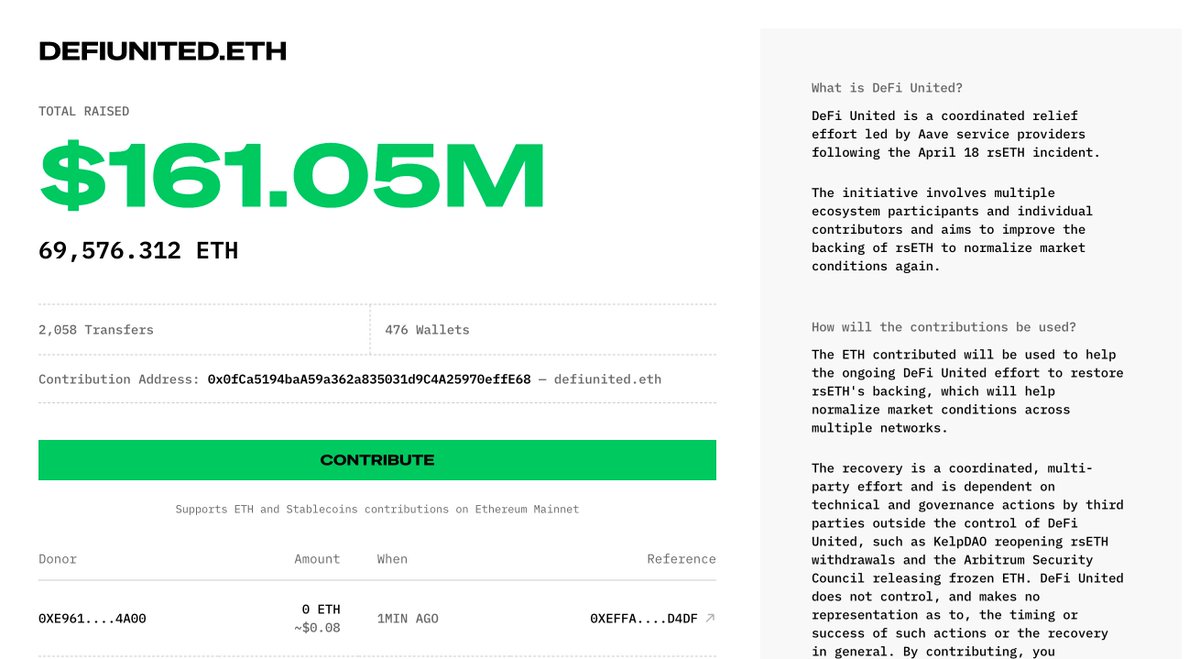
无意中去Aave的捐款地址看了一下,出乎我意料的是,真的有大量散户,甚至 mini 户在给 Aave 发起的这个 DefiUnited捐钱。
看到几块,十几块的转账陆陆续续进入账户,我觉得这个行业还是有一些原来的极客精神在保留的,甚至可以算是人性光辉了。
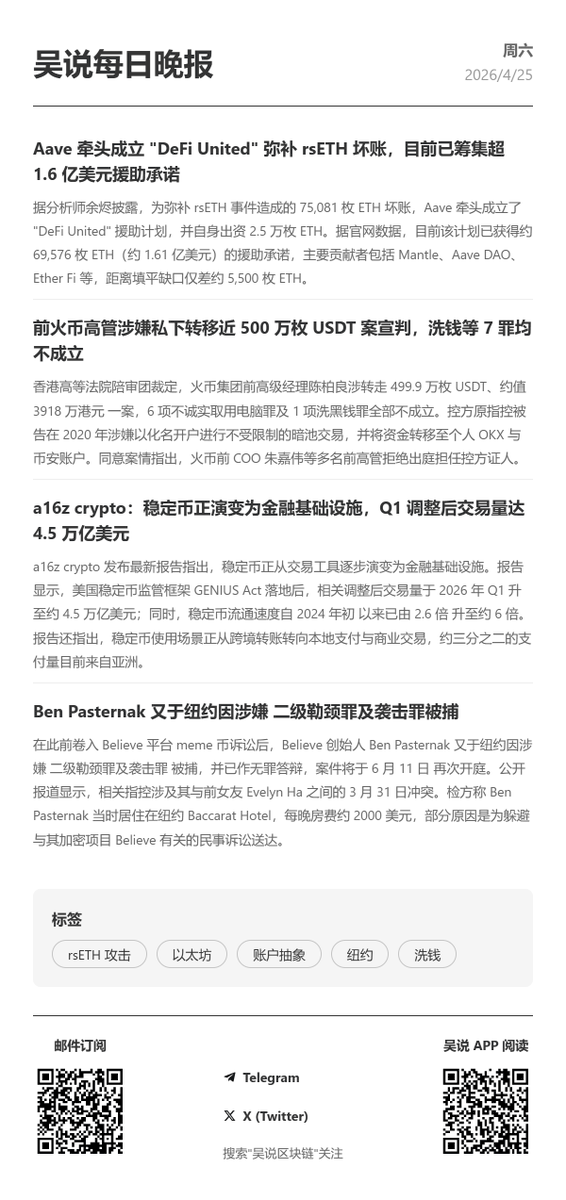
目前账户已经有了1.61亿,不少了。
我捐了 0.1eth,小小尽一点力,也算是亲身再一次经历了行业危机时刻。钱不多,估计也起不了什么作用,但至少我觉得 Crypto 还并不完全是个粪坑,试着让它更好吧。
传送门:
https://t.co/H3MnNWaPND
看到几块,十几块的转账陆陆续续进入账户,我觉得这个行业还是有一些原来的极客精神在保留的,甚至可以算是人性光辉了。
目前账户已经有了1.61亿,不少了。
我捐了 0.1eth,小小尽一点力,也算是亲身再一次经历了行业危机时刻。钱不多,估计也起不了什么作用,但至少我觉得 Crypto 还并不完全是个粪坑,试着让它更好吧。
传送门:
https://t.co/H3MnNWaPND
♥ 9 · 👁 1350 · View →
吴说区块链 @wublockchain12 · 12:00
CZ:普通人在 Web3 依然有巨大机会
币安创始人 CZ @cz_binance 4 月 15 日的币安广场直播中表示,尽管传统机构和大资金持续入场,普通人在 Web3 领域依然存在巨大机会。他指出,加密行业虽较 10 年前更成熟,但受限于监管,大量核心金融活动尚未真正上链,加密资产在全球财富中的占比依然极低。
此外,AI 的火热吸走了市场热钱与噪音,反而为 Web3 过滤出了真正的长期建设者,且未来 AI Agent 的全球协作也将大量依赖区块链基础设施。因此,普通人的核心优势不在于资金体量,而在于通过长期学习与建设,抓住尚未被充分开发的赛道。
来源:Binance
币安创始人 CZ @cz_binance 4 月 15 日的币安广场直播中表示,尽管传统机构和大资金持续入场,普通人在 Web3 领域依然存在巨大机会。他指出,加密行业虽较 10 年前更成熟,但受限于监管,大量核心金融活动尚未真正上链,加密资产在全球财富中的占比依然极低。
此外,AI 的火热吸走了市场热钱与噪音,反而为 Web3 过滤出了真正的长期建设者,且未来 AI Agent 的全球协作也将大量依赖区块链基础设施。因此,普通人的核心优势不在于资金体量,而在于通过长期学习与建设,抓住尚未被充分开发的赛道。
来源:Binance
🔁 1 · 👁 52 · View →

6哥 ⁶⁶⁶ 🇨🇳 chinawhalecapital.eth @ChinaWhaleETH · 11:53
$ROTUS 美国弱智 我搞了一些袋子,这团队也不错,让我们拭目以待。不错的宣传策略。发行后立即达到 7m,目前稳定在 2m以上。
考虑到川普的新口号以及美国目前占据新闻头条,这完全说得通。很有可能继续扩大市场占有率。
https://t.co/2kqavjvKk8 https://t.co/M7oyA6T5ev
考虑到川普的新口号以及美国目前占据新闻头条,这完全说得通。很有可能继续扩大市场占有率。
https://t.co/2kqavjvKk8 https://t.co/M7oyA6T5ev

👁 406 · View →
吴说区块链 @wublockchain12 · 11:48
吴说获悉,比特币开发者 Paul Sztorc 发文宣布正协助创建一个名为 "eCash" 的新比特币硬分叉,预计于今年 8 月上线 。比特币持有者将按 1:1 比例获得 eCash 。该项目 L1 代码与 Bitcoin Core 保持兼容,将通过 CUSF 激活 BIP300/301,并引入支持合并挖矿的 7 个 Drivechain 二层网络 。Sztorc 表示,与 2017 年的 BCH 分叉不同,eCash 名称中不含 "Bitcoin",并提前 4 个月发出预警,团队将提供代币拆分工具以重放所有初始交易 。
https://t.co/IefWTjbmGM
https://t.co/IefWTjbmGM
👁 315 · View →
11:01 · 7 tweets
币安Binance华语 @binancezh · 10:40
GM🐱“这写的啥?看不懂...问问 #BinanceAiPro 吧!” https://t.co/cRHqO6x2MG

♥ 27 · 🔁 3 · 👁 2058 · View →

梭教授说 @hellosuoha · 10:44
✍️无聊的市场,地狱的难度
不知道还有多少人在嘲讽去隔壁美股玩的人呢,或许ta们也在后悔自己没去隔壁吧,毕竟隔壁创新高了,而在crypto,还在震荡中没走出方向。
🌟无聊的市场
你很难在市场找到主线路了,尤其是最近DeFi被干得不要不要的,已经让大多数人觉得crypto中最有价值的defi都不敢动了。
那还有什么有价值的东西呢?
没有创新,只剩下了老破旧,只剩下了炒作空间。
🌟平平无奇的赌场
你会发现各大交易所开始砍预算了,把之前合作的KOL还有市场都砍了一大半。
让很多员工开始自己当KOL了。
而在拉新层面,也是愈发的努力起来了,各种卷vip的服务。
而更多的表现出现在K线上,谁能“制造大波动”谁就抓到了“韭菜的内心”,毕竟赌大家还是想赌几倍几十倍的。
无论是 $SIREN $RIVER $RAVE 等妖币,有什么价值吗,拉开K线看,都是“金钱的味道”都是“赌场的味道”,有所谓的“垃圾or不垃圾”之分吗?
赌场的区分无非就是,我家涨幅榜前十,放到你家只有涨幅榜前一百,你来我这里赌博还是去其他家赌博?
而且这比在赌场赢的概率还低,毕竟赌场是靠抽水增加了赢的概率,而在“crypto大赌场”中,除了抽水以外还有“荷官”的“上帝视角”,无论是拉盘砸盘都是在自己“高度控筹”的下方。
所以这有更加的“纯粹”,就是一个“大鱼吃小鱼小鱼吃虾米”的过程。
只要MM/项目方/庄能避开“交易所(赌场)的封控,所以能跑通,谁都能赚钱。
不然你想想为什么,现在给MM配资,据说月化高达20-30%的收益,这比贩毒挣钱啊。
搁在这里勾心斗角,判断操盘心思最后还被割了,可不是地狱模式吗?
🌟隔壁一片大好
美股怎么说呢,当时全力玩的时候,就遇上了战争,直接tmd天天震荡下行。
等我割后,就开始无脑上冲了,只能说简单模式我没吃到,地狱模式我全在车上。
至少crypto所有人知道的知名美股都是一路向上,不说涨的超级多的那些,就大盘股都涨的比btc多。
当然光看是这样,实际上操作可能和我一样傻逼😂。
最近知道很多朋友说的一套一套,实际上仓位也没多少,甚至可能还亏钱的😭。
看起来很简单呗,实际上操作其实不太懂还是很难受的。
🌟流动性大不同
想想以前大家冲土狗,都是看1B的,几十M甚至100M都愿意追。
现在大家冲土狗,都是去分流的,市值越低越好,到时候吃一个BETA就麻了。
反观美股,随便冲,各种投资利好的杠杆随便翘起来。
你猜猜流动性是先去美股还是先来币圈?
😮💨,简单点,哪里能赚钱,哪里容易赚钱就去哪儿吧。
不知道还有多少人在嘲讽去隔壁美股玩的人呢,或许ta们也在后悔自己没去隔壁吧,毕竟隔壁创新高了,而在crypto,还在震荡中没走出方向。
🌟无聊的市场
你很难在市场找到主线路了,尤其是最近DeFi被干得不要不要的,已经让大多数人觉得crypto中最有价值的defi都不敢动了。
那还有什么有价值的东西呢?
没有创新,只剩下了老破旧,只剩下了炒作空间。
🌟平平无奇的赌场
你会发现各大交易所开始砍预算了,把之前合作的KOL还有市场都砍了一大半。
让很多员工开始自己当KOL了。
而在拉新层面,也是愈发的努力起来了,各种卷vip的服务。
而更多的表现出现在K线上,谁能“制造大波动”谁就抓到了“韭菜的内心”,毕竟赌大家还是想赌几倍几十倍的。
无论是 $SIREN $RIVER $RAVE 等妖币,有什么价值吗,拉开K线看,都是“金钱的味道”都是“赌场的味道”,有所谓的“垃圾or不垃圾”之分吗?
赌场的区分无非就是,我家涨幅榜前十,放到你家只有涨幅榜前一百,你来我这里赌博还是去其他家赌博?
而且这比在赌场赢的概率还低,毕竟赌场是靠抽水增加了赢的概率,而在“crypto大赌场”中,除了抽水以外还有“荷官”的“上帝视角”,无论是拉盘砸盘都是在自己“高度控筹”的下方。
所以这有更加的“纯粹”,就是一个“大鱼吃小鱼小鱼吃虾米”的过程。
只要MM/项目方/庄能避开“交易所(赌场)的封控,所以能跑通,谁都能赚钱。
不然你想想为什么,现在给MM配资,据说月化高达20-30%的收益,这比贩毒挣钱啊。
搁在这里勾心斗角,判断操盘心思最后还被割了,可不是地狱模式吗?
🌟隔壁一片大好
美股怎么说呢,当时全力玩的时候,就遇上了战争,直接tmd天天震荡下行。
等我割后,就开始无脑上冲了,只能说简单模式我没吃到,地狱模式我全在车上。
至少crypto所有人知道的知名美股都是一路向上,不说涨的超级多的那些,就大盘股都涨的比btc多。
当然光看是这样,实际上操作可能和我一样傻逼😂。
最近知道很多朋友说的一套一套,实际上仓位也没多少,甚至可能还亏钱的😭。
看起来很简单呗,实际上操作其实不太懂还是很难受的。
🌟流动性大不同
想想以前大家冲土狗,都是看1B的,几十M甚至100M都愿意追。
现在大家冲土狗,都是去分流的,市值越低越好,到时候吃一个BETA就麻了。
反观美股,随便冲,各种投资利好的杠杆随便翘起来。
你猜猜流动性是先去美股还是先来币圈?
😮💨,简单点,哪里能赚钱,哪里容易赚钱就去哪儿吧。
♥ 5 · 👁 628 · View →
吴说区块链 @wublockchain12 · 10:52
委内瑞拉反对派领导人 María Corina Machado 提出以出售该国石油换取比特币,并建立国家级比特币储备的设想。文章称,这一表态被市场解读为主权国家将 BTC 作为储备抵押物的一种新叙事。(CryptoBriefing)
https://t.co/AnxlkDJHi9
https://t.co/AnxlkDJHi9
♥ 2 · 👁 238 · View →

BNB Chain @BNBCHAIN · 11:00
If you need to recover BEP2 assets, timing matters.
Right now, requests are processed within ~7 days. From 1 May, they move to batch processing with longer timelines.
You’re still in the faster window with 5 days left 👇
https://t.co/JqfHPvj7Hg https://t.co/wqOIdIiNUz
Right now, requests are processed within ~7 days. From 1 May, they move to batch processing with longer timelines.
You’re still in the faster window with 5 days left 👇
https://t.co/JqfHPvj7Hg https://t.co/wqOIdIiNUz

♥ 1 · 👁 128 · View →
10:00 · 8 tweets

AB Kuai.Dong @_FORAB · 09:46
马斯克正式进入社交领域,旗下 X Chat 聊天软件今早在苹果 IOS 正式上线,目前可以开放使用。
• 端到端加密聊天
• 阻止录截屏幕
• 可删除所有人消息
• 跨设备语音或视频通话
• 聊天阅后即焚或自动消失
• 数百人的大型群聊,X 账号登陆
它被视为今年最重要的产品之一,支持中文,TG 杀手。 https://t.co/7C5fvpzREj
• 端到端加密聊天
• 阻止录截屏幕
• 可删除所有人消息
• 跨设备语音或视频通话
• 聊天阅后即焚或自动消失
• 数百人的大型群聊,X 账号登陆
它被视为今年最重要的产品之一,支持中文,TG 杀手。 https://t.co/7C5fvpzREj


♥ 22 · 🔁 3 · 👁 4092 · View →
土澳大狮兄BroLeon | 🔶BNB | @BroLeon · 09:51
以太坊基金会又出来骚操作了。
为什么大家一直对以太坊基金会印象很差?因为 EF 除了之前攒了一堆圣母和蛀虫围绕 V 神搞小朝廷修仙之外,一直不停的卖卖卖。每年要卖出远超他们正常运营所需的钱,尤其经常在市场不好的时候 dump,。
今天这次进一步引起众怒的原因是,在 AAVE 的 Defi 危机里,整个 DeFi 生态在自救,Lido/Aave/EtherFi 创始人都在捐 ETH的时候,EF 反向操作。
他们非但没有站出来牵头,甚至也没有积极参与,而是在 2387 这个并不算好的价格又套现了 10000 个 $ETH ,而且还有点得意的表示这次我可没有直接砸盘哦,是 OTC 的,快来表扬我。
推文发出引发群嘲。
尤其是在诸多项目响应 AAVE 的"DeFi United"纷纷解囊相助,甚至 @StaniKulechov 都开始开放对散户的募资通道的时候, @ethereumfndn 干出这种事真的非常刺眼。
本来就没啥公信力的组织进一步加深了行业对他们的负面印象,well done,不如早日解散算了吧。
为什么大家一直对以太坊基金会印象很差?因为 EF 除了之前攒了一堆圣母和蛀虫围绕 V 神搞小朝廷修仙之外,一直不停的卖卖卖。每年要卖出远超他们正常运营所需的钱,尤其经常在市场不好的时候 dump,。
今天这次进一步引起众怒的原因是,在 AAVE 的 Defi 危机里,整个 DeFi 生态在自救,Lido/Aave/EtherFi 创始人都在捐 ETH的时候,EF 反向操作。
他们非但没有站出来牵头,甚至也没有积极参与,而是在 2387 这个并不算好的价格又套现了 10000 个 $ETH ,而且还有点得意的表示这次我可没有直接砸盘哦,是 OTC 的,快来表扬我。
推文发出引发群嘲。
尤其是在诸多项目响应 AAVE 的"DeFi United"纷纷解囊相助,甚至 @StaniKulechov 都开始开放对散户的募资通道的时候, @ethereumfndn 干出这种事真的非常刺眼。
本来就没啥公信力的组织进一步加深了行业对他们的负面印象,well done,不如早日解散算了吧。
♥ 4 · 👁 837 · View →

Niner 🍡九儿🔶 @lijiuer1 · 09:40
我的监控一直给 $Ape 的信号
其实0.12就一直给了
但是因为我在埋头整逻辑没看到
晚上睡觉前没忍住还是多了一下
然后顺手挂了个止盈
醒来一看已经止盈了但是单子还在
原来是我开完之后被套了,自己加仓了
止盈的只有初始仓位
又被动多赚了点😁
现在每天在完善交易逻辑
再整一下就试试自动交易
我觉得还是我的脑子更强一点
因为我说要开的时候,AI 强烈建议我别开😈
其实0.12就一直给了
但是因为我在埋头整逻辑没看到
晚上睡觉前没忍住还是多了一下
然后顺手挂了个止盈
醒来一看已经止盈了但是单子还在
原来是我开完之后被套了,自己加仓了
止盈的只有初始仓位
又被动多赚了点😁
现在每天在完善交易逻辑
再整一下就试试自动交易
我觉得还是我的脑子更强一点
因为我说要开的时候,AI 强烈建议我别开😈

♥ 4 · 👁 594 · View →
潜水观察员🇨🇳 @connectfarm1 · 09:52
随着昨晚自己的活动结束,整个区块链周在我这边才算是真正的结束了,很多人都说这次活动没啥意思,但是在我看来整个行业正在孕育新的生机,尤其是ai trade这个领域将会给整个行业带来全新的叙事,今天不具体展开来说,主要做个小结:
1、越来越多人来到深圳了,无论是做web3还是ai ,如果你想成为一个超级个体,那么深圳一定是最好的地方,有最包容的环境、最国际化的视野、最卷的氛围、最有活力的年轻人;
2、在香港人必言ai,但是夸夸其谈者太多,真正手撸一个策略的都很少,所以回来第一件事情就是自己撸了两个策略,只有真正做过ai trade 的玩家才算是真正的ai +web3玩家,而且这个赛道天花板很高;
3、一姐 @heyibinance 记忆真的很好,在一个座谈会上她直接说上次来香港就见了我和孔总,另外座谈会上她也正面的回答了我的问题,币安以自己的方式投资了国内的一些明星项目的股权。另外也期待币安alpha 上新方式可能的变革带来的破圈流量;
4、@CoinUpOfficials 交易所是我认为接下来有机会再跃升两个等级的交易所,无论从产品体验还是市场势能,整体都处在一个上升周期,期待从熊市到牛市的飞跃;
5、@termix_ai 是在Bnbchain 活动上感受到的最有意义的AI项目,和创始人聊了15分钟,认知和落地双到位,如果web3真有能对ai 产业有帮助的项目,那么 @termix_ai 有一席之地;
6、遇到了很多老朋友的“前台”,有意思的是这些老朋友都已经换名字在江湖行走了,在随后的一些私局上见到的时候他们还挺不好意思的;
7、mm是在香港永远离不开的话题,基本上行业最大的几个mm都把核心中枢放在了香港,而且手握非常夸张的资金,以前mm给项目配资3000万美金都夸张了,这次听到的是可以配资1亿刀;
这次还有特别多想见面的朋友因为时间关系没见到,期待下次见面!
1、越来越多人来到深圳了,无论是做web3还是ai ,如果你想成为一个超级个体,那么深圳一定是最好的地方,有最包容的环境、最国际化的视野、最卷的氛围、最有活力的年轻人;
2、在香港人必言ai,但是夸夸其谈者太多,真正手撸一个策略的都很少,所以回来第一件事情就是自己撸了两个策略,只有真正做过ai trade 的玩家才算是真正的ai +web3玩家,而且这个赛道天花板很高;
3、一姐 @heyibinance 记忆真的很好,在一个座谈会上她直接说上次来香港就见了我和孔总,另外座谈会上她也正面的回答了我的问题,币安以自己的方式投资了国内的一些明星项目的股权。另外也期待币安alpha 上新方式可能的变革带来的破圈流量;
4、@CoinUpOfficials 交易所是我认为接下来有机会再跃升两个等级的交易所,无论从产品体验还是市场势能,整体都处在一个上升周期,期待从熊市到牛市的飞跃;
5、@termix_ai 是在Bnbchain 活动上感受到的最有意义的AI项目,和创始人聊了15分钟,认知和落地双到位,如果web3真有能对ai 产业有帮助的项目,那么 @termix_ai 有一席之地;
6、遇到了很多老朋友的“前台”,有意思的是这些老朋友都已经换名字在江湖行走了,在随后的一些私局上见到的时候他们还挺不好意思的;
7、mm是在香港永远离不开的话题,基本上行业最大的几个mm都把核心中枢放在了香港,而且手握非常夸张的资金,以前mm给项目配资3000万美金都夸张了,这次听到的是可以配资1亿刀;
这次还有特别多想见面的朋友因为时间关系没见到,期待下次见面!


♥ 3 · 👁 546 · View →
吴说区块链 @wublockchain12 · 09:52
据 The Guardian 报道,特朗普将于 4 月 25 日 在海湖庄园出席面向 TRUMP 持币者的活动,前 297 名 买家可参加,其中前 29 名 还可获得额外交流资格。报道称,这已是特朗普再度为其 meme 币买家举办类似活动,并引发民主党议员及伦理监督人士对利益冲突和“付费换接触”风险的批评。活动页面同时注明,特朗普不保证一定出席。
https://t.co/zusiKfQCMw
https://t.co/zusiKfQCMw
♥ 1 · 👁 243 · View →
09:00 · 7 tweets

余烬 @EmberCN · 08:52
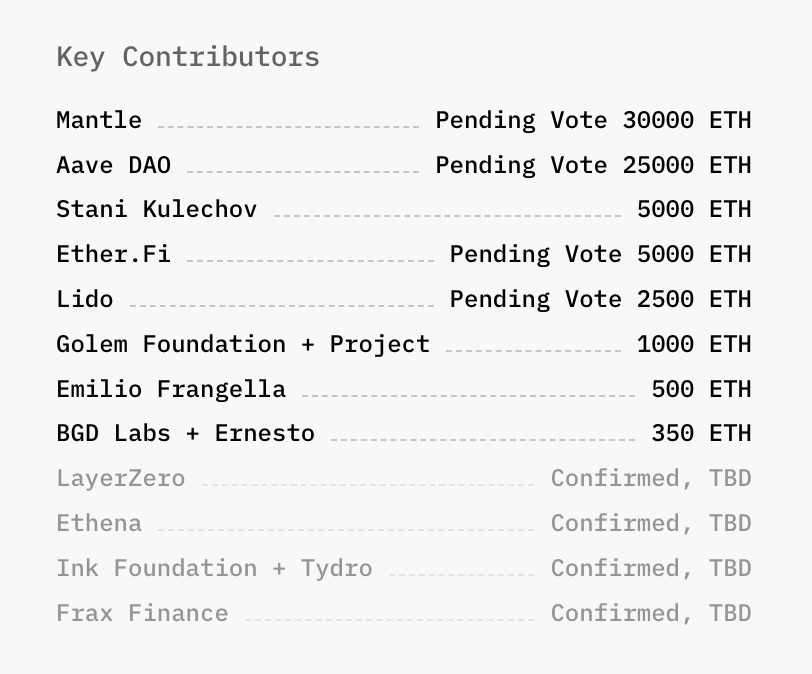
作为这次 rsETH 事件中直接受到影响的借贷平台,Aave 自己是出了 2.5 万枚 ETH ($5775 万) 用于坏账弥补。
总共的坏账缺口是 75,081 枚 ETH,Aave 协调建立了 "DeFi United" 计划接收援助资金来弥补。
现在的话已经获得了 69,576 枚 ETH 的援助承诺 (借款及捐款),只差 5,505 枚 ETH 缺口了。
而像 LayerZero 等几家有确定援助但还没确定金额,再加上这几家的应该是已经够填坑了。
Aave 专门做了个捐款途径跟数据公布的网站:https://t.co/sYHWcdbScZ
----------------------------------------------------
#Bitget VIP 费率更低,福利更狠!买美股秒级入场
总共的坏账缺口是 75,081 枚 ETH,Aave 协调建立了 "DeFi United" 计划接收援助资金来弥补。
现在的话已经获得了 69,576 枚 ETH 的援助承诺 (借款及捐款),只差 5,505 枚 ETH 缺口了。
而像 LayerZero 等几家有确定援助但还没确定金额,再加上这几家的应该是已经够填坑了。
Aave 专门做了个捐款途径跟数据公布的网站:https://t.co/sYHWcdbScZ
----------------------------------------------------
#Bitget VIP 费率更低,福利更狠!买美股秒级入场
♥ 4 · 🔁 1 · 👁 848 · View →
吴说区块链 @wublockchain12 · 08:59
据《亚洲经济日报》报道,韩国法律专家指出,婚姻存续期间积累的加密货币及投资收益属于合法的离婚财产分割对象。若一方在离婚时恶意隐瞒其加密资产,另一方在离婚后两年内仍有权向法院申请追加分割。在资产追踪方面,当事人可通过申请调取过往银行交易记录,查明流向加密交易所的法币资金,并进一步通过法院命令要求相关交易所披露具体的虚拟资产持有情况。
https://t.co/Uzk6W8d5hp
https://t.co/Uzk6W8d5hp
👁 16 · View →
吴说区块链 @wublockchain12 · 08:49
吴说获悉,Polymarket 新任 DeFi 工程副总裁 Josh Stevens 发文表示,平台的业务增长已远超基础设施承载能力,团队正推进多项重大技术升级。
主要包括:计划进行链迁移以追求更低 Gas 和更短出块时间;彻底重构中央限价订单簿;即将推出基于新合约和 Rust 后端的永续合约;修复“交易被取消”问题;以及开发全新的智能合约与统一 API。Stevens 承诺,从下周五起将每周公布工程更新进度,以提升透明度。
Polymarket 目前运行在 Polygon 链上,此前已因交易延迟、取消等问题受到用户广泛关注。
https://t.co/q0wfxsGbxq
主要包括:计划进行链迁移以追求更低 Gas 和更短出块时间;彻底重构中央限价订单簿;即将推出基于新合约和 Rust 后端的永续合约;修复“交易被取消”问题;以及开发全新的智能合约与统一 API。Stevens 承诺,从下周五起将每周公布工程更新进度,以提升透明度。
Polymarket 目前运行在 Polygon 链上,此前已因交易延迟、取消等问题受到用户广泛关注。
https://t.co/q0wfxsGbxq
👁 242 · View →

WquGuru🦀 @wquguru · 08:39
Claude在周四统一重置了用量,但是周限截止时间定在了周一,意味着想发挥最大功效,3-4天就要用完之前7天的量,刚好还碰上休息日/周末,这强度😂
👁 161 · View →
Powered by degendar.com · Auto-generated digest
Disclaimer: Bell Feed aggregates and AI-summarizes public X posts from crypto/finance KOL accounts. Summaries are not financial advice and may contain errors introduced by AI processing. Tickers and trade ideas reflect individual opinions from original posters, not recommendations from Bell Feed. Verify with primary sources before making financial decisions.
免責聲明:Bell Feed 彙整並以 AI 摘要公開 X 帖文,非投資建議。Ticker 與交易想法為原發文者個人觀點,請先查證原始來源再做任何財務決策。